
Last updated September 20, 2026
Full 25-point door and opener safety check with every visit - springs, cables, rollers, tracks, and your LiftMaster or Chamberlain opener included
You get a price before we start. It does not change when the truck arrives.
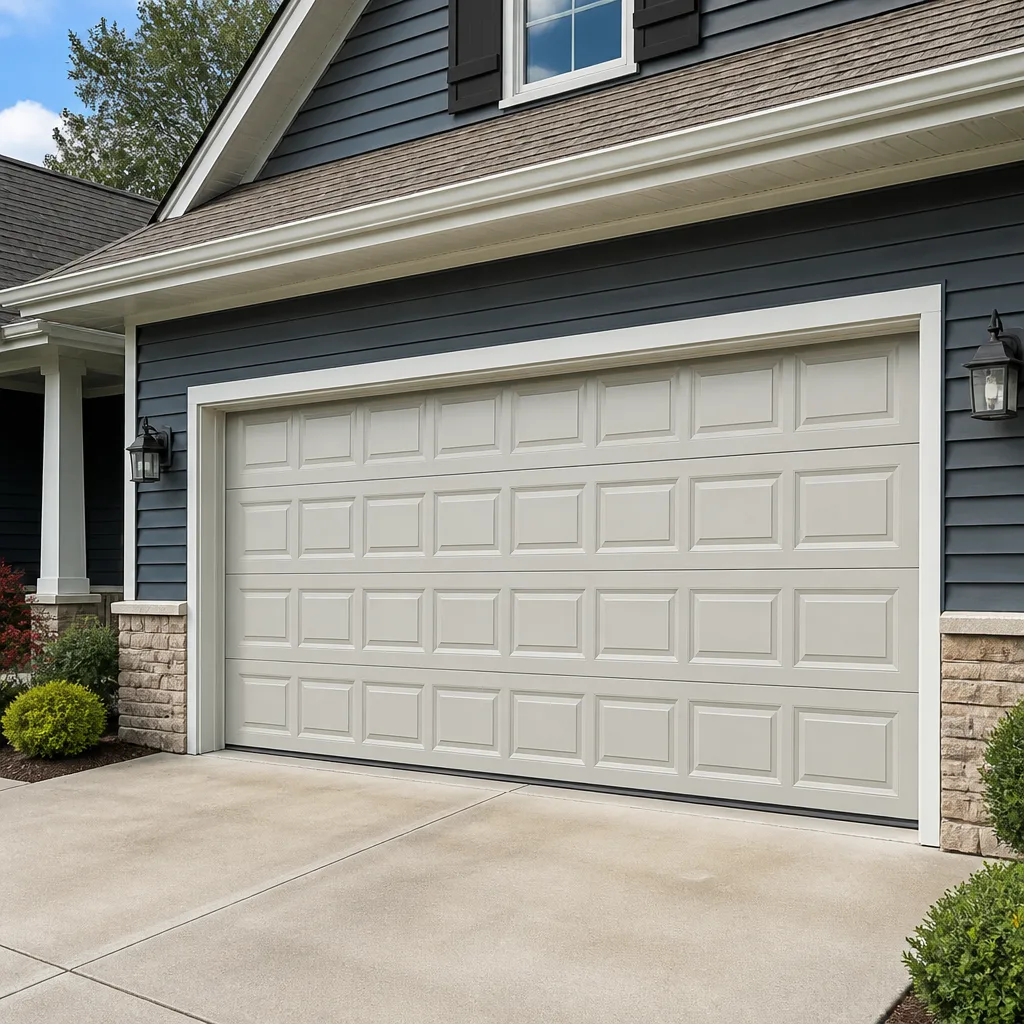
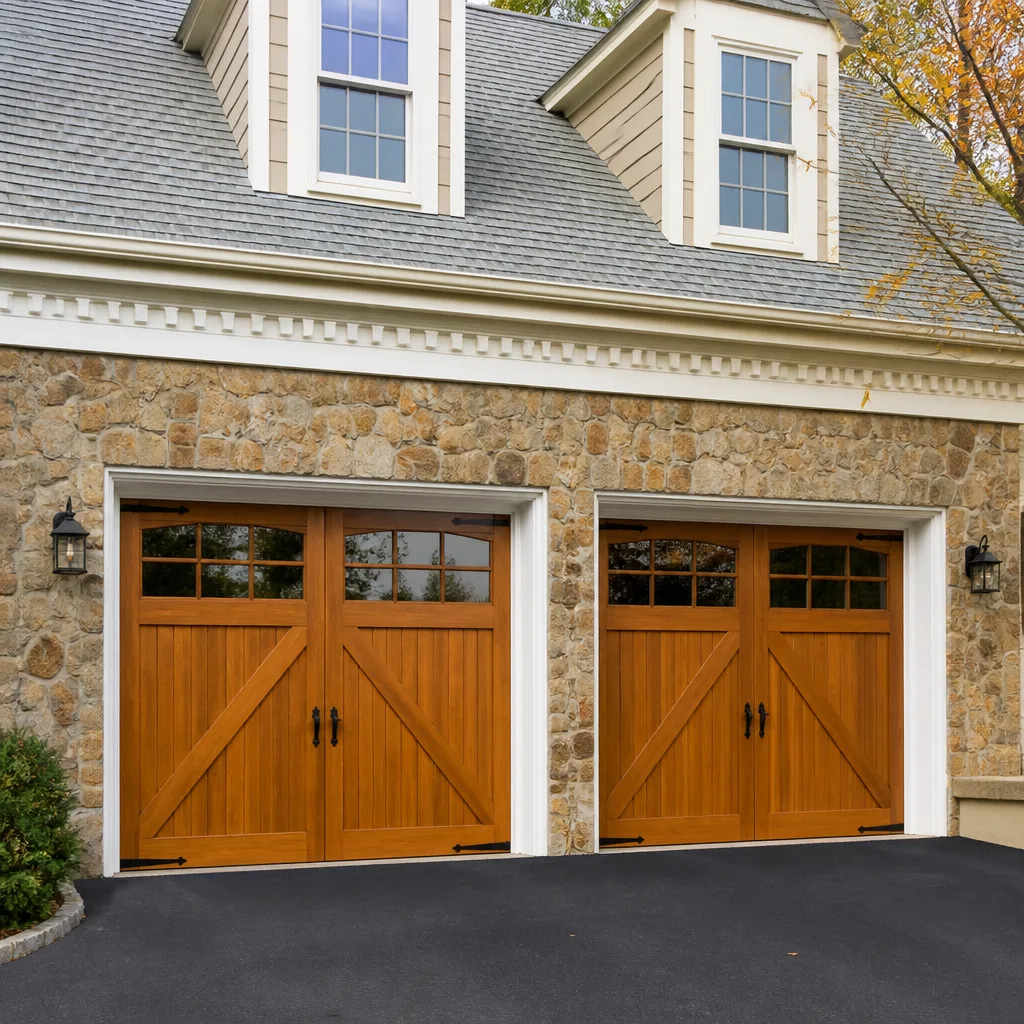
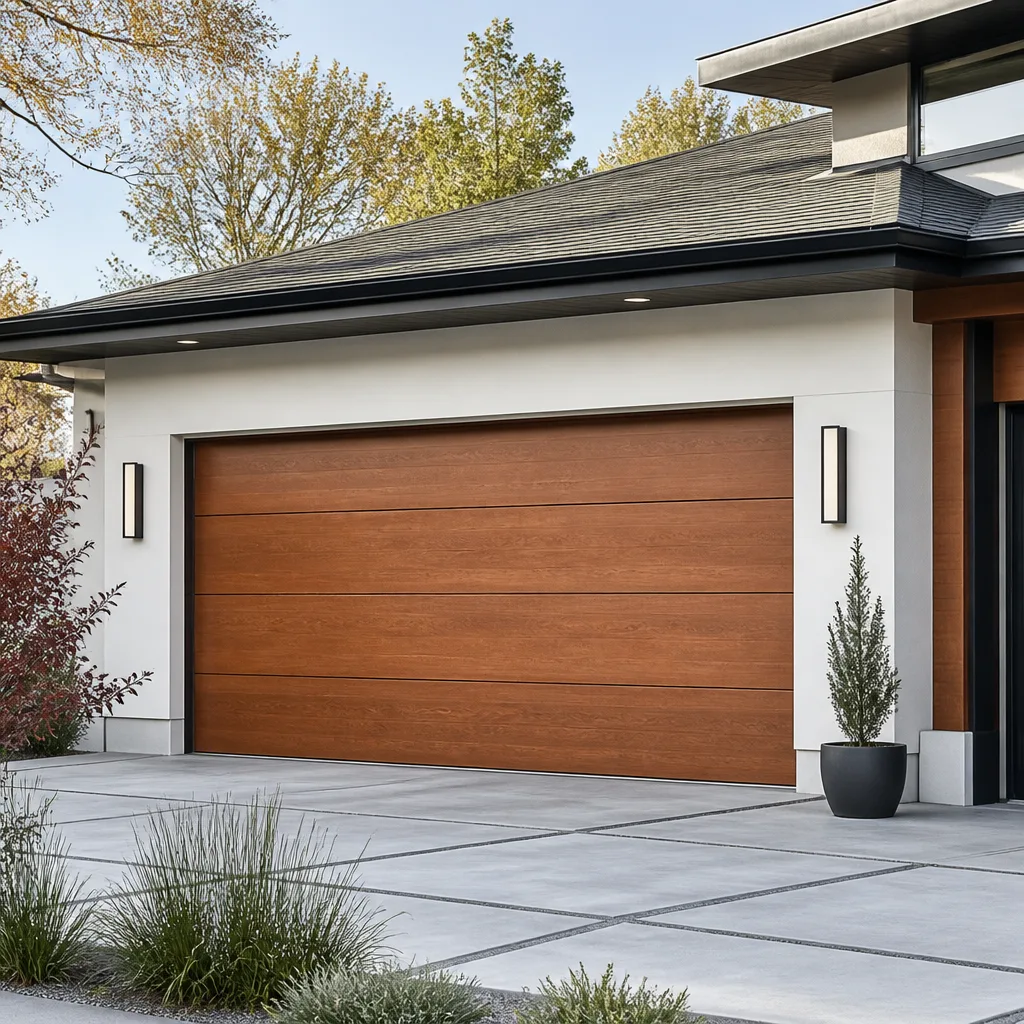
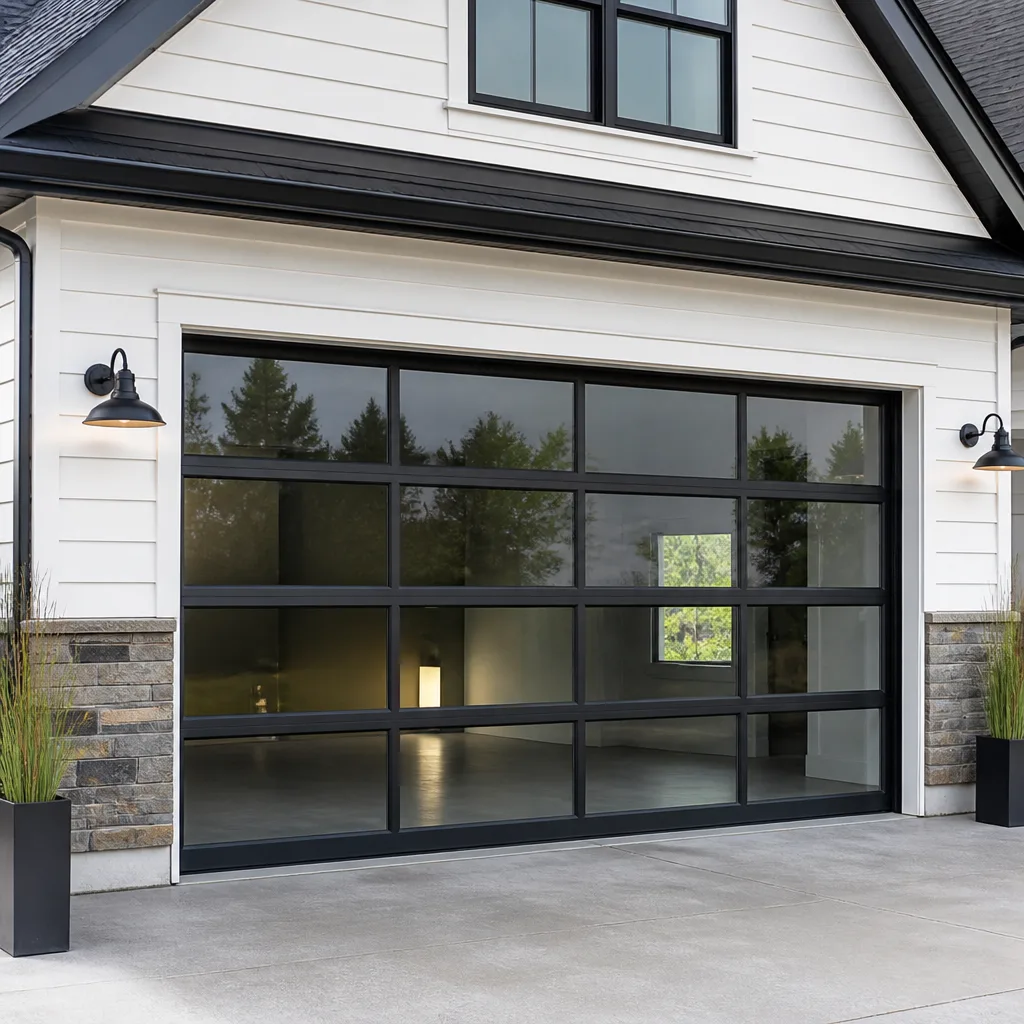
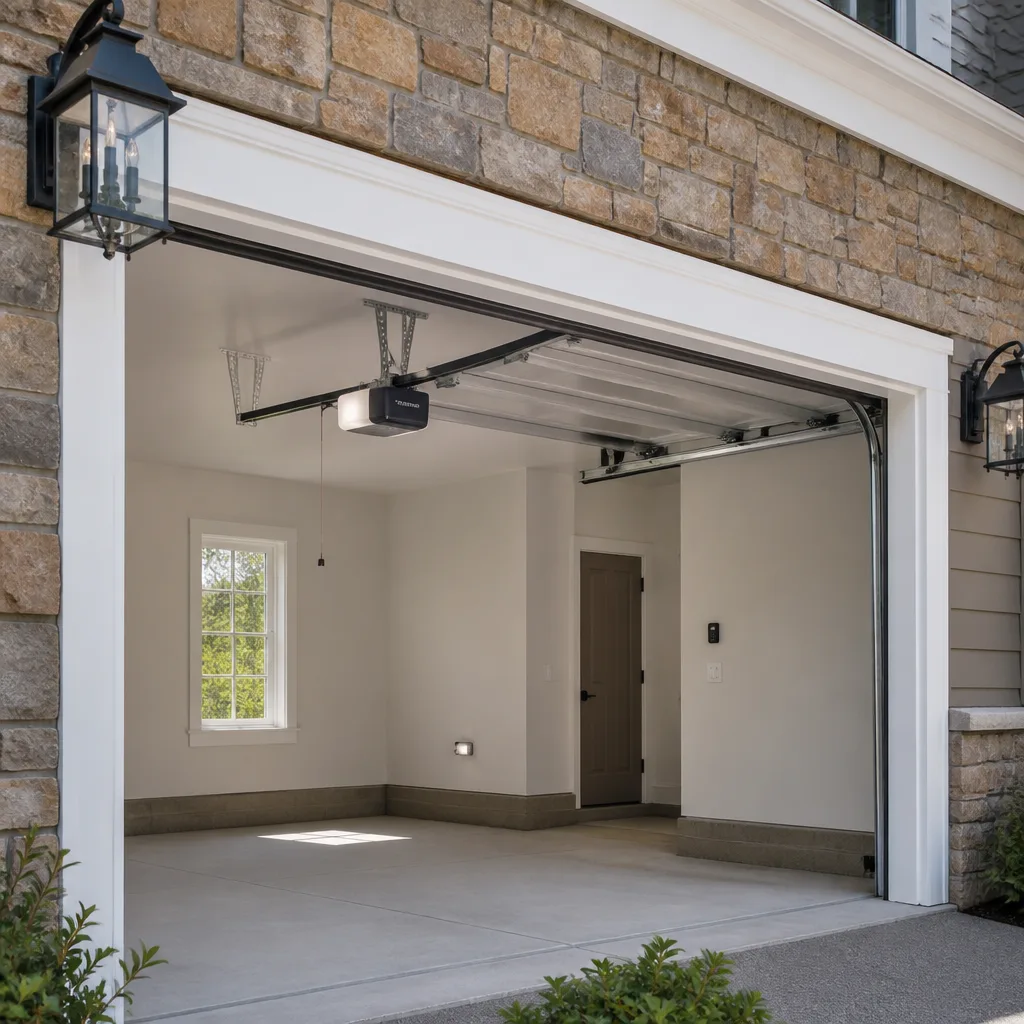
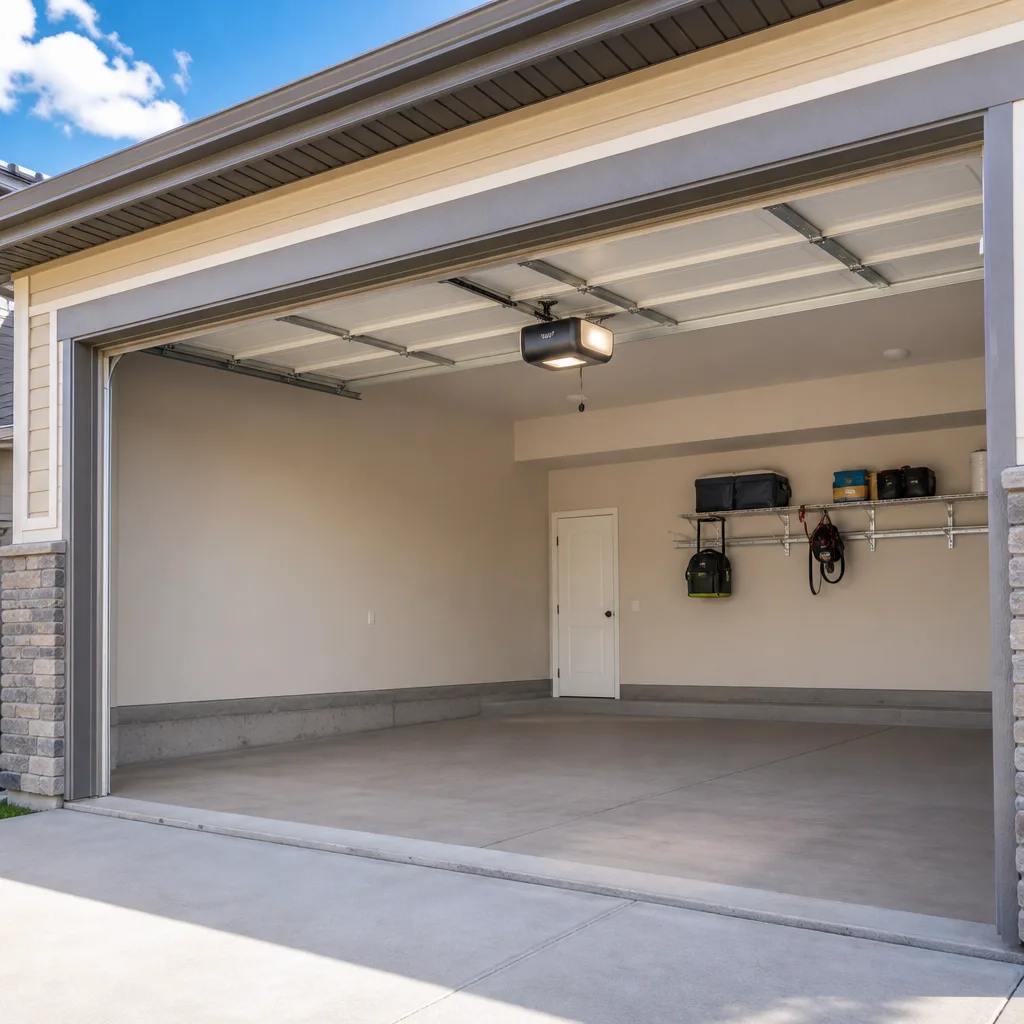
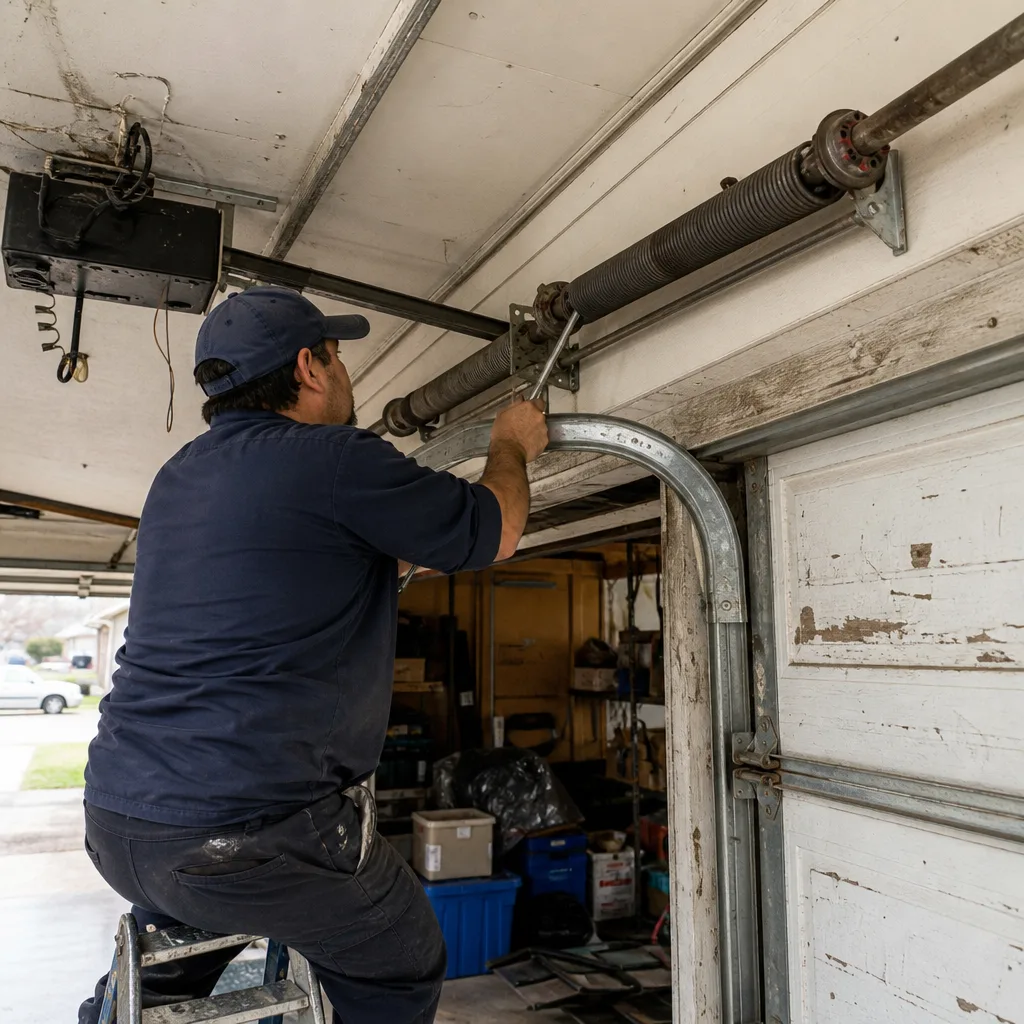 Before
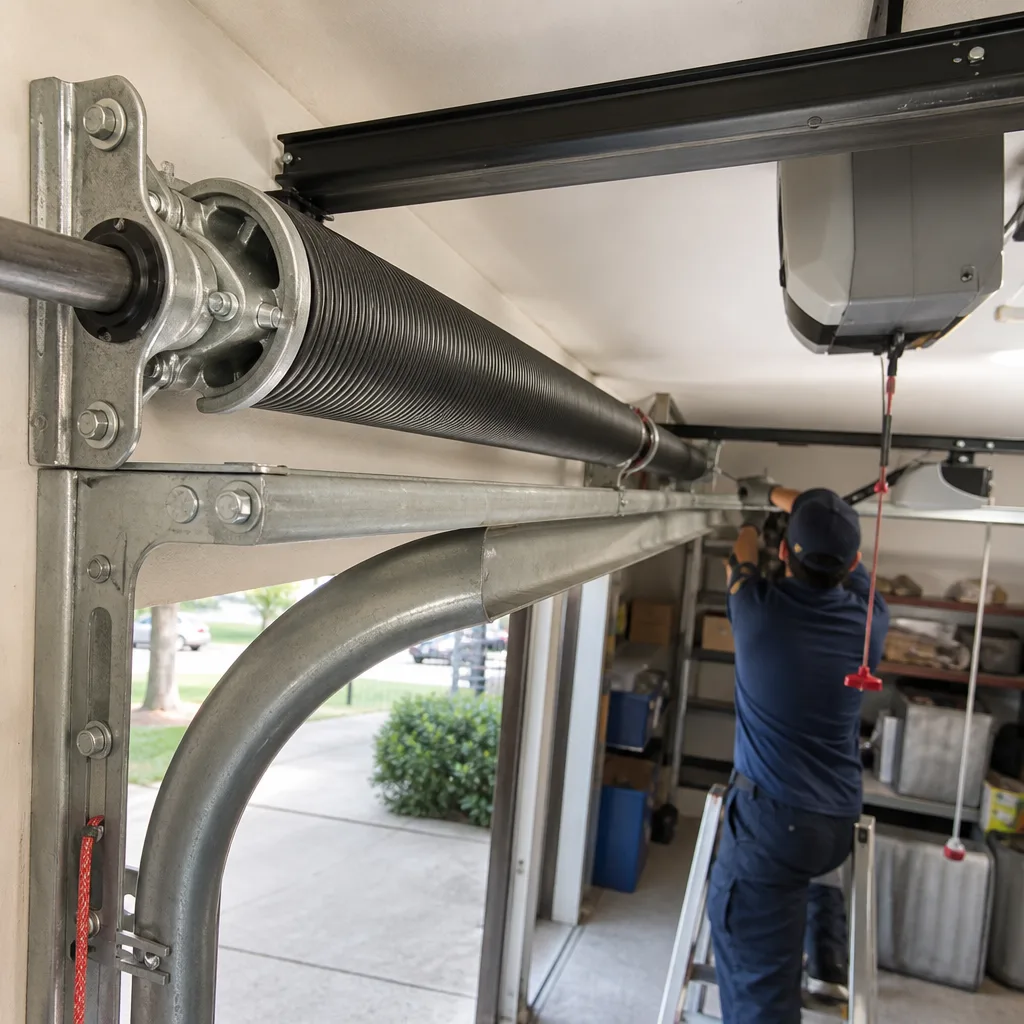 After
After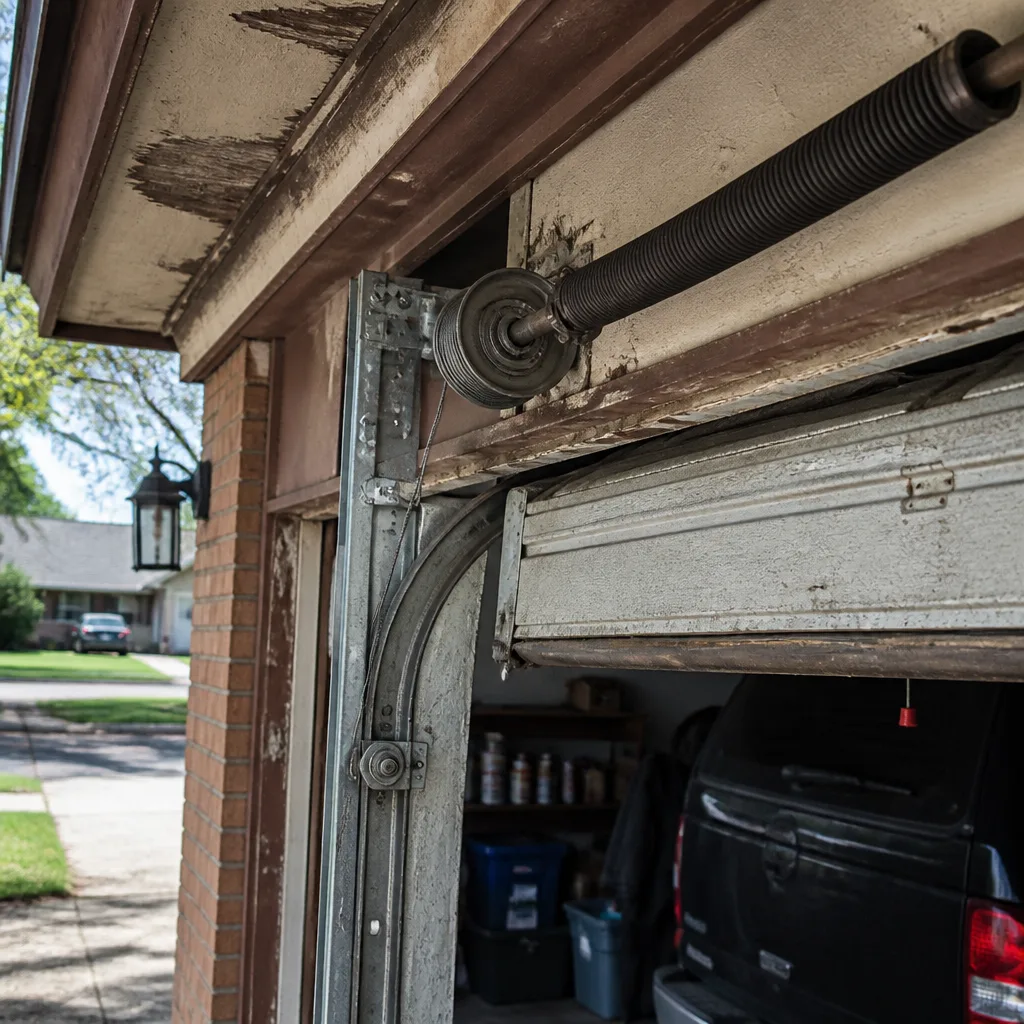 Before
 After
After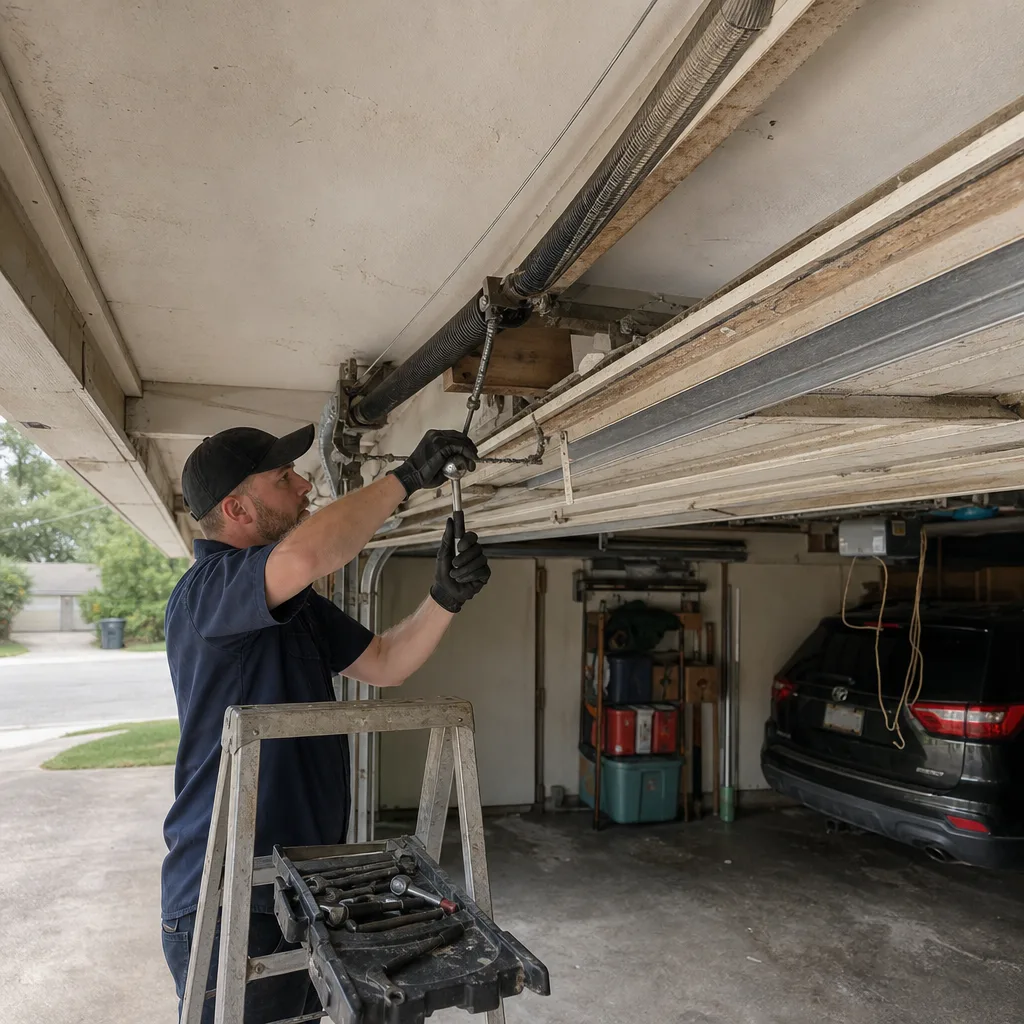 Before
 After
AfterGarage Door Repair Maintenance Checklist for Richardson Homeowners
Here’s the number nobody puts on a maintenance brochure: a $6 can of white lithium grease on your rollers is the difference between a $180 roller replacement and a $340 track-and-roller job inside 18 months. We know because we’ve walked into hundreds of Richardson garages where the failure was photographed, the invoice was written, and the whole thing traced back to a skipped quarterly task that takes four minutes. This guide attaches a real dollar figure to every inspection item, because a checklist that doesn’t tell you what neglect costs is just decoration. You’ll get the monthly, quarterly, and annual breakdown with time estimates, a lubrication map that names products, and the seasonal adjustments that matter when Richardson hit 100°F in July and your steel track expands just enough to throw everything off.
Quick Answer
A proper garage door maintenance routine for Richardson homes breaks into three tiers: a 10-minute monthly visual and sound check, a 30-minute quarterly lubrication and fastener pass, and a 60-minute annual calibration and wear assessment. The parts that fail most often in this climate are torsion springs, rollers, and cables, and each one gives you warning signs weeks before it lets go. Expect to spend $8 to $40 per year on materials like white lithium grease and silicone spray, and roughly $50 to $200 per year if you have a technician handle the calibration-heavy annual visit.
Table of Contents
- Monthly Maintenance Tasks for Richardson Homeowners
- Quarterly Maintenance Tasks with Material Costs
- Annual Maintenance and Calibration Checklist
- The Lubrication Map: What Gets What Product
- Wear Indicators: Normal Aging vs. Imminent Failure
- Seasonal Adjustments Unique to Richardson
- Your Printable Maintenance Log Format
- Common Mistakes to Avoid
- When to Call a Professional
- Frequently Asked Questions
BeforeAfterMonthly Maintenance Tasks for Richardson Homeowners
Monthly tasks are about noticing change, not fixing it. A garage door that’s starting to fail sends signals through sound, vibration, and visible wear long before the part breaks. These checks take ten minutes and cost nothing but attention. Do them on the first Saturday of the month so the habit sticks.
What to do every month, in order:
- Run the door through a full open-close cycle while standing inside the garage. Listen for grinding, squealing, or a rhythmic thump that repeats at the same point in the travel. A single thump per cycle usually means a flat spot on a roller. A squeal means dry metal.
- Watch the door as it moves. It should travel straight and smooth. If the left side rises slightly before the right, or the door shudders mid-travel, you have a balance issue that gets worse every week it’s ignored.
- Check the safety reverse sensors. Place a roll of paper towels in the door’s path and close it. The door should reverse within two seconds of contact. Do this once a month. Sensors drift out of alignment from vibration, and a misaligned sensor is a $0 fix that prevents a crushed bike, a damaged car bumper, or worse.
- Look at the cables on both sides. They should be wound tightly on the drum with no gaps, frays, or loose strands. Cables under tension are the one component you inspect but never touch.
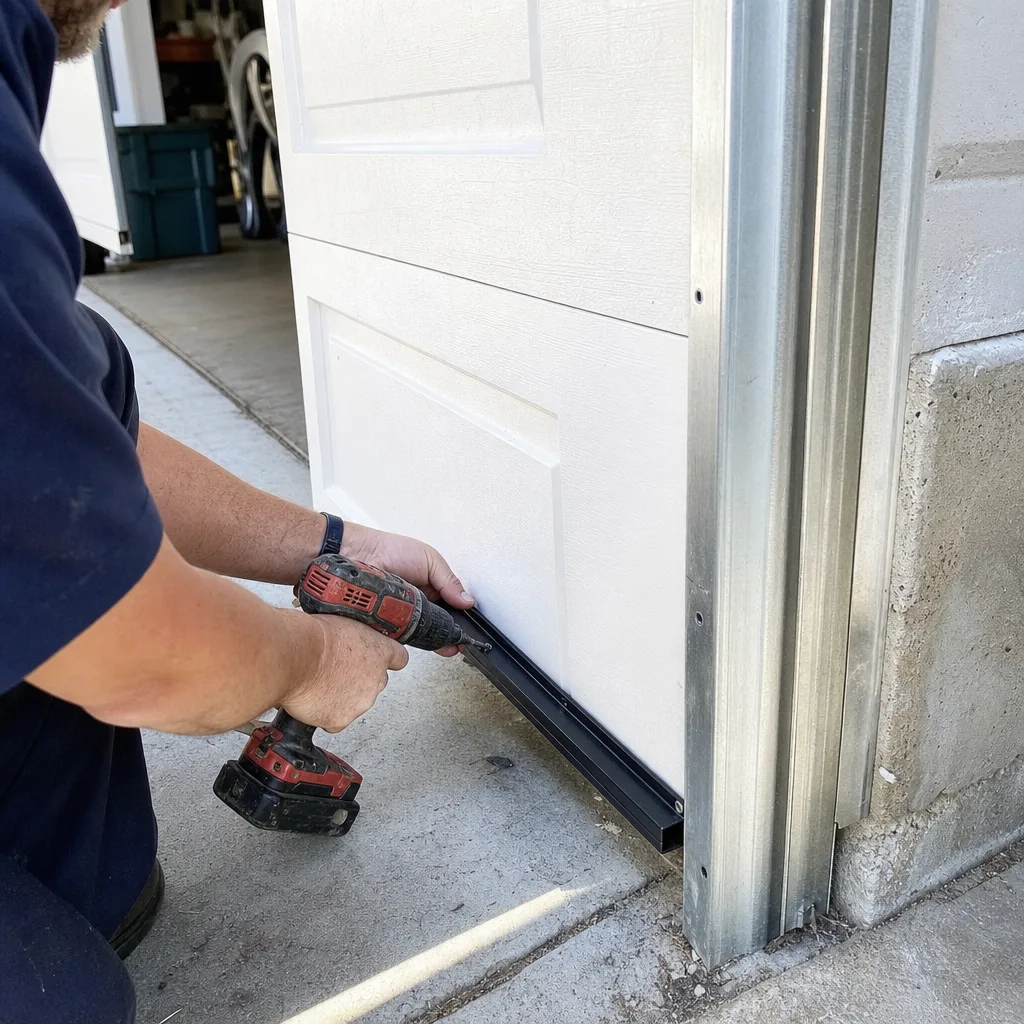
- Check the weather seal along the bottom of the door. In Richardson, a torn seal lets in the July heat, the May storms, and the crickets that follow both. Replacement seal costs $12 to $30 at any hardware store and presses into the retainer channel in ten minutes.
Keep a half-page log sheet taped inside the garage door frame. Write the date and anything you noticed. When a technician eventually comes to your home in Richardson, that log is the difference between a diagnosis and a guess. We’d rather read six months of your notes than listen to a description of a noise.
Quarterly Maintenance Tasks with Material Costs
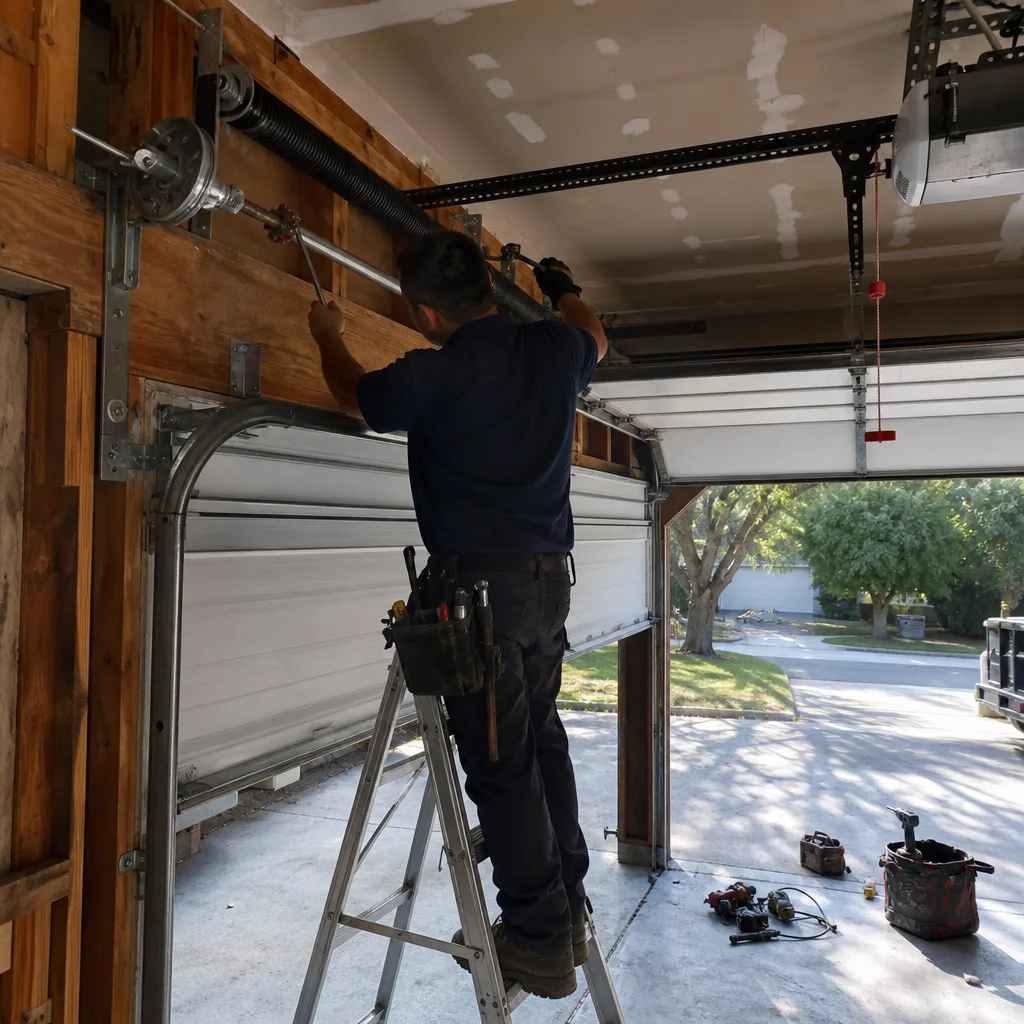
Quarterly tasks cost about $40 per year in materials and take 30 minutes per session. This is where the money is saved or lost. A roller that runs dry for one Richardson summer eats its own bearing from the inside, and the replacement cost is $15 to $25 per roller in parts plus labor. Grease costs pennies per application.
March, June, September, December: the quarterly pass.
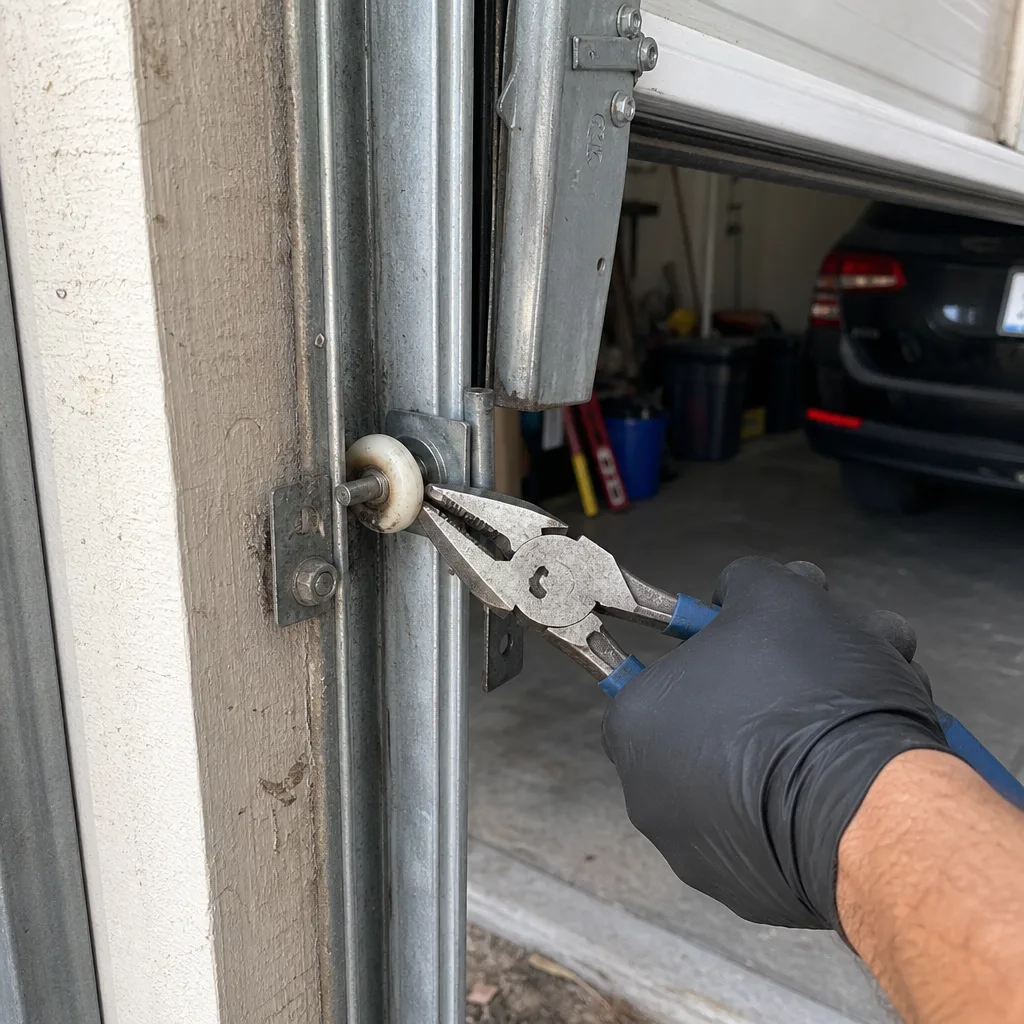
- Clean the tracks with a damp cloth. Tracks do not need grease. The rollers ride inside the track on sealed bearings, and any sticky lubricant in the track collects dust, which grinds down the roller wheels. Wipe them clean and leave them dry.
- Lubricate the lift cables with a light coat of white lithium grease or cable lubricant. Do not use WD-40 as your primary protection; it cleans well but dries out and leaves the cable exposed within weeks. Cables that rust through snap without much warning, and a snapped cable sends the door down unevenly. Cable replacement in Richardson runs $150 to $250 including the service call.
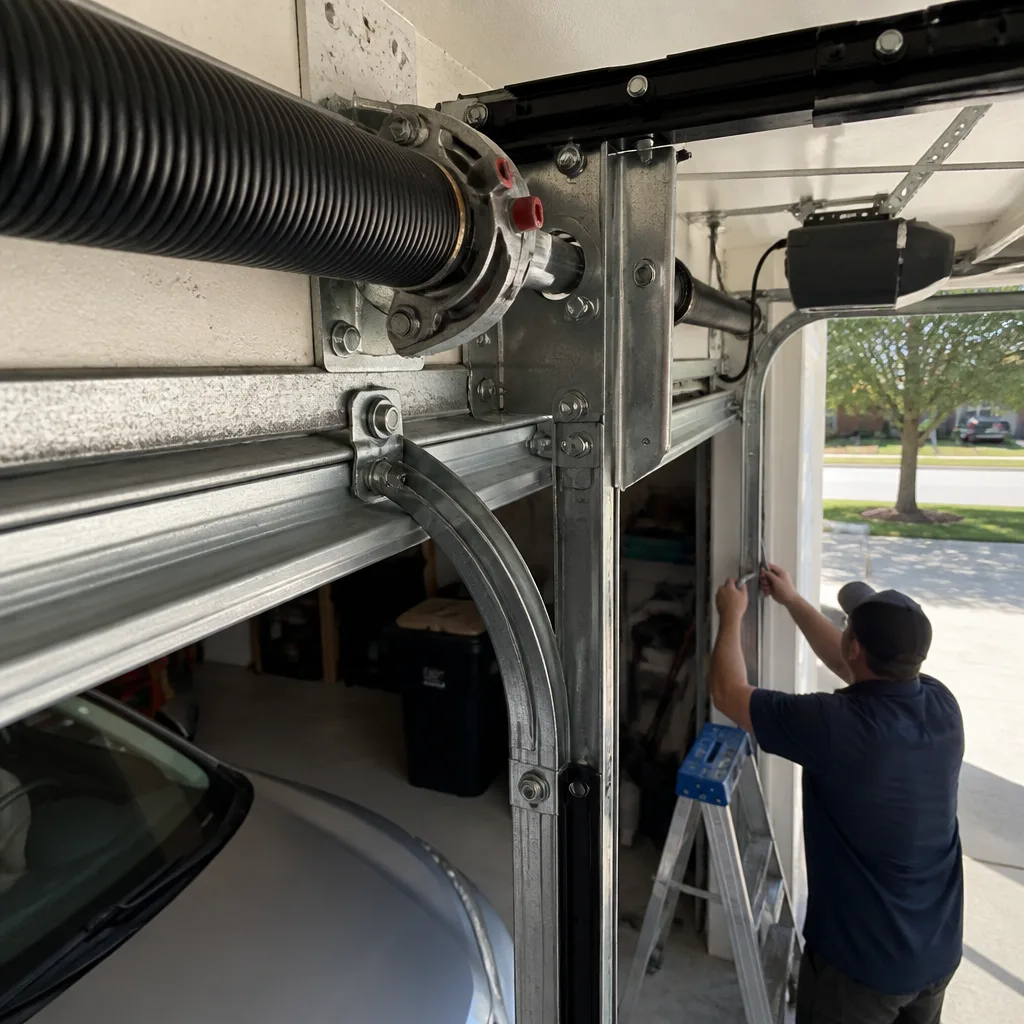
- Apply white lithium grease to the torsion spring. The spring coils flex thousands of times, and dry coils rub against each other and wear faster. A thin coat along the length of the spring stops the friction noise and extends the spring life. Torsion spring replacement is the single most expensive repair on a garage door, typically $280 to $420 in Richardson, so protecting it is worth four cents of grease.
- Grease the roller bearings. If you have steel rollers with exposed bearings, apply a small amount of white lithium grease to each bearing. If you have nylon rollers, skip the grease entirely; most nylon rollers have sealed bearings and the grease attacks the nylon. Nylon rollers should get silicone spray on the stem only if they squeak.
- Check every bolt, nut, and hinge screw. Hand-tighten anything that’s backed out. The vibration of daily cycling works fasteners loose over months. Use a socket set, not pliers, to avoid rounding the heads.
Total material cost per session: about $8 to $12 if you already own the grease and spray. The alternative is waiting for the noise, then paying a service call fee and parts markup. In Richardson, a diagnostic visit alone typically runs $75 to $125. The math favors doing the quarterly pass.
Annual Maintenance and Calibration Checklist
The annual pass is where you catch the failures that monthly and quarterly checks can’t see: tension changes, balance drift, and electrical wear on the opener. It takes 60 minutes. If you’re not comfortable with the calibration steps, this is the section worth hiring out. In Richardson, a full annual tune-up from a technician runs $90 to $180, and it includes all of the following plus a written condition report.
Annual checklist, in order of priority:
- Test the door balance. Pull the emergency release cord while the door is closed, then lift the door manually to about waist height. It should stay there without falling or rising. If it falls, the springs are losing tension and the opener is working harder to compensate. If it rises, the springs are over-tensioned. Both conditions shorten opener motor life, and an overheated motor is a $200 to $400 replacement. This balance test reveals spring wear months before the spring breaks.
- Inspect the torsion spring for gaps or rust. A healthy spring sits tight with no visible separation between coils. A gap means the spring has begun to fail. Surface rust is cosmetic; deep pitting means the metal is compromised. Spring replacement in Richardson runs $280 to $420, and it’s not a DIY job. The tension in a wound spring can take a finger off or worse. Watch for the warning signs, then call someone.
- Check the opener’s force settings. The opener should reverse when it hits a 2×4 laid flat on the ground. If it forces through the obstruction, the close force is set too high, and the door is pushing with more strength than the safety standard allows. Adjust the force dial on the motor unit down until it reverses properly. This takes five minutes and protects anyone who might be in the door’s path.
- Inspect the opener drive system. If you have a chain drive, look for slack in the chain. More than half an inch of sag means the tension needs adjusting. If you have a belt drive, look for cracks or fraying in the rubber belt. Belt replacement is rare but should not be ignored; a belt that snaps mid-cycle drops the door.
- Test the manual release. Pull the red cord and open the door by hand through its full travel. It should move smoothly with consistent resistance. This simulates a power outage. If your family doesn’t know how to operate the door manually, have them practice it now.
- Examine the weather seal for hardening or cracking. Richardson’s heat bakes the rubber, and a seal that’s turned stiff and cracked lets in water during spring storms. Replacement is $12 to $30 and takes ten minutes.
- Check the mounting brackets and ceiling supports for the opener. Look for loose lag bolts, cracked brackets, or any movement when the opener runs. A falling opener is a serious hazard. Tighten what’s loose and replace what’s cracked.
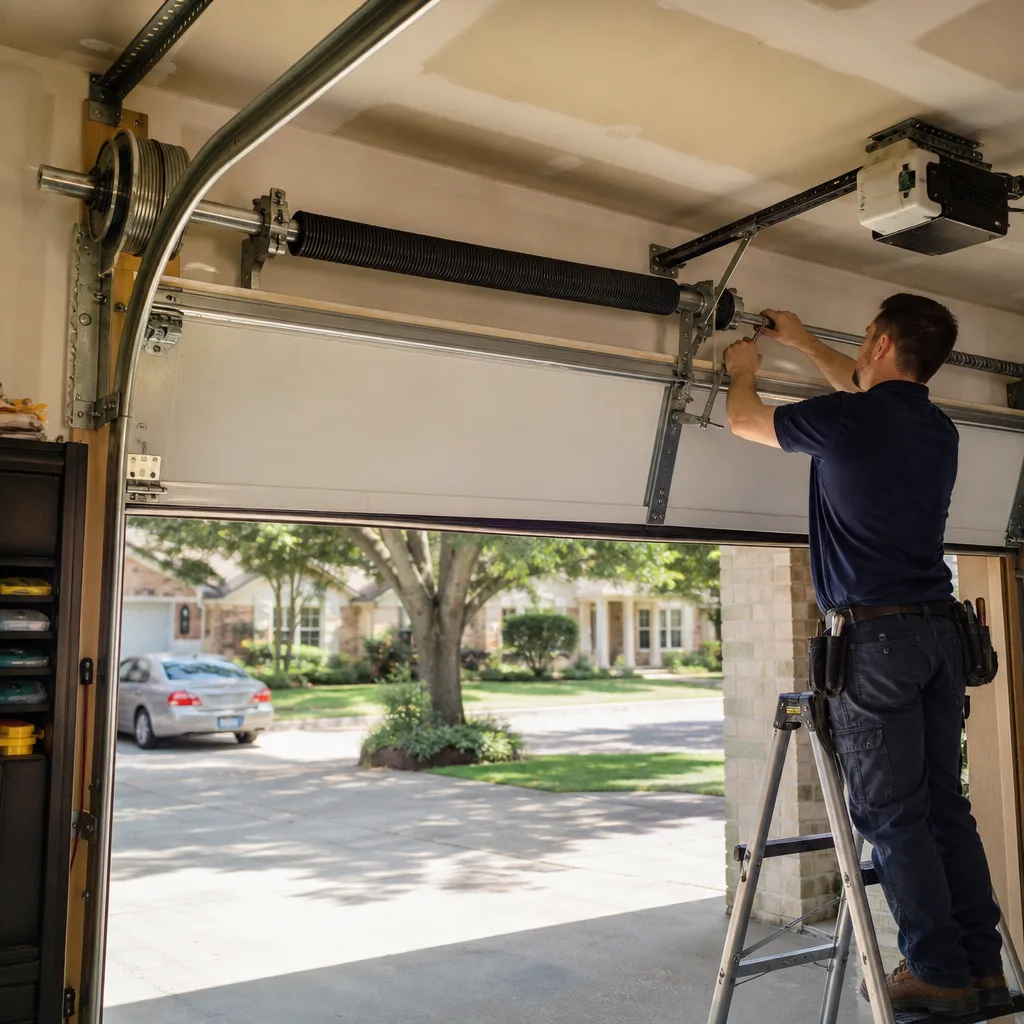
If this list feels like more than you want to handle, our technicians in Richardson perform this entire annual pass as a single flat-priced visit through our Garage Door Repair services. You’ll get a written condition report and photos of anything that’s wearing, so you can see the part before deciding on any repair. No one quotes you a replacement you haven’t seen evidence for.
The Lubrication Map: What Gets What Product
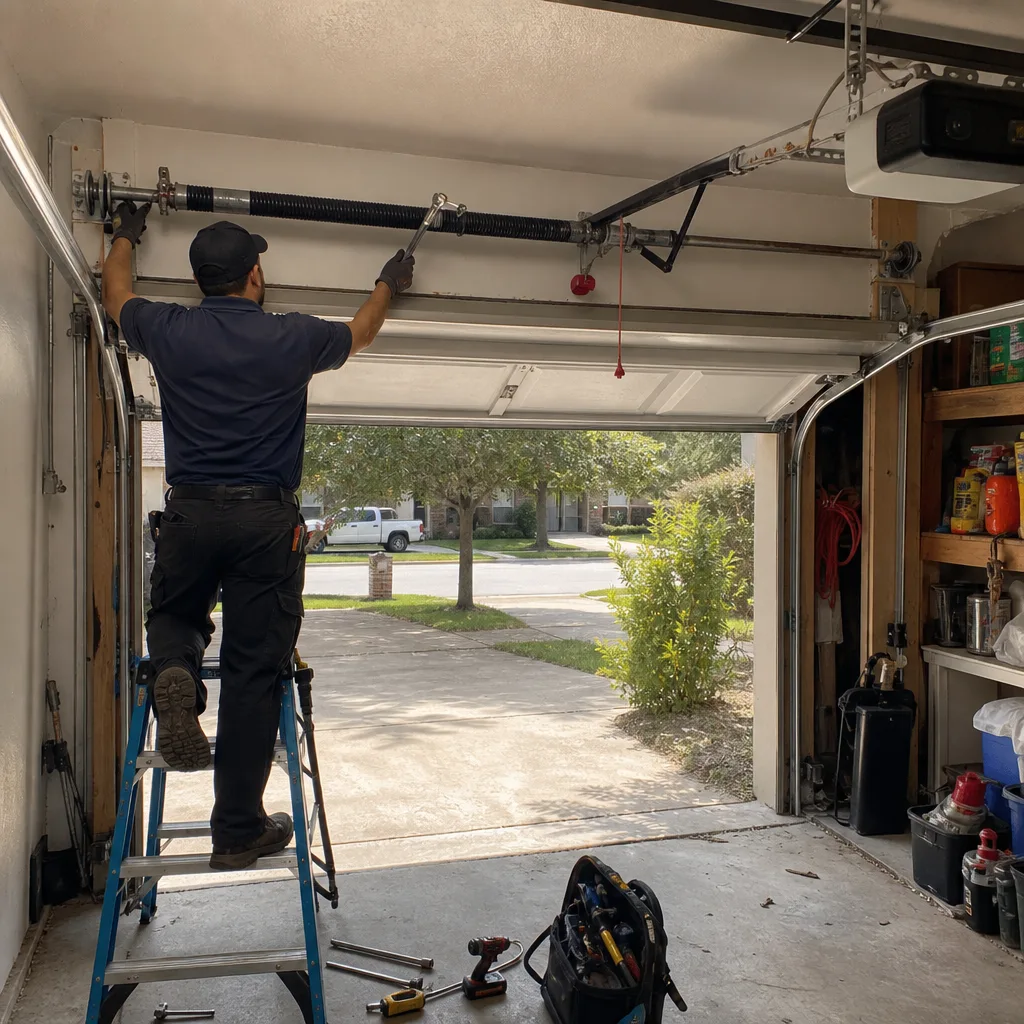
Using the wrong product on the wrong component causes failures that look like wear but are actually chemical damage. Nylon rollers dissolved by petroleum-based grease, rubber seals swollen by the wrong spray, and opener rails clogged with sticky lithium that was never meant to go there. Here’s the map.
| Component | Product | How Much | Notes |
|---|---|---|---|
| Torsion spring | White lithium grease | Thin coat along coil length | Wipe off excess; it flings on first cycle |
| Hinges (metal-to-metal pivot points) | White lithium grease or motor oil | One drop per pivot | Work the door once after applying to distribute |
| Steel rollers with exposed bearings | White lithium grease | Small dab per bearing | Spin the roller by hand to work it in |
| Nylon rollers | Silicone spray on stem only | One short spray if squeaking | Never petroleum grease on nylon; it degrades the material |
| Tracks | Nothing | Clean with damp cloth only | Lubricant in tracks collects dust and grinds rollers |
| Lift cables | White lithium grease or cable lube | Light coat along exposed cable | Prevents rust; do not saturate |
| Weather seal | Silicone spray or rubber conditioner | Light coat, wipe off excess | Prevents drying and cracking in Richardson heat |
| Opener rail (screw drive) | White lithium grease | Thin bead along rail | Check your owner’s manual first; some LiftMaster and Genie models specify no grease |
| Opener rail (chain drive) | White lithium grease on chain | Light coat on chain links | Wipe off excess; dripping grease lands on the car |
Two products do 90% of the work: a tube of white lithium grease and a can of silicone spray. Total cost is under $15 at any hardware store in Richardson. The key is knowing which goes where. Petroleum products attack nylon and some rubber compounds. Silicone is safe on nearly everything but doesn’t hold up under heavy friction. When in doubt, check the door manufacturer’s documentation. Clopay and Amarr both publish lubrication specs for their doors; the opener manufacturer (LiftMaster, Chamberlain, Genie) publishes specs for the rail.
Wear Indicators: Normal Aging vs. Imminent Failure
Every part on a garage door has a life span, and most give you clear signals before the final break, as detailed in our Garage Door Warning Signs: A Richardson Homeowner’s Reference Guide. Learning to read those signals is what separates a $12 fix from a $400 emergency call. In our experience across Richardson, homeowners who knew these indicators caught failures a month early. Homeowners who didn’t met us at 7 p.m. on a Sunday.
Torsion springs: the big one.
- Normal aging: Light surface rust on the coils, a slight decrease in lift strength over 8 to 12 years, no visible gaps between coils.
- Imminent failure: A visible gap between two or more coils, deep pitting rust, a door that’s suddenly heavier to lift manually, or a loud bang from the garage followed by a door that won’t open. That bang was the spring. Average spring life in Richardson’s climate: 8 to 12 years, with a range of 8,000 to 15,000 cycles depending on the spring’s cycle rating. A household that cycles the door six times a day hits 2,190 cycles per year. Do the math against the spring’s rated cycle count, and you’ll know roughly when to budget for replacement before it surprises you.
Cables.
- Normal aging: Slight discoloration, a few surface rust spots, minor stiffness after years of use.
- Imminent failure: Frayed strands poking out from the main bundle, rust that flakes off when touched, a cable that’s slack on one side while the door is closed, or visible unwinding from the drum. If a cable has already started to unravel, do not run the door. Call a technician. A door running on one cable torques the sections and can pull the track off the wall.
Rollers.
- Normal aging: Light wear marks on the wheel surface, slight play when wiggled by hand, a thin layer of dust on the stem.
- Imminent failure: A flat spot on the wheel that causes a thump at the same point each cycle, visible cracks in nylon wheels, a wheel that’s worn to a smaller diameter than its neighbors, or metal-on-metal grinding from a bearing that’s run dry. Roller replacement runs $15 to $25 per roller in parts, but a seized roller that keeps running carves up the track, and track replacement is where a $25 job becomes $300.
Opener electrical components.
- Normal aging: The motor runs slightly warmer after years of use, the remote range shrinks a few feet, the lights dim for a half-second on startup.
- Imminent failure: The opener hums but the door doesn’t move, the opener reverses for no reason mid-cycle, the remote works only from inside the garage, or the wall button works but the remote doesn’t. Logic board replacement on a LiftMaster or Chamberlain opener runs $180 to $280. On older units, that’s a sign the opener is near end of life, and a new opener installation is worth pricing alongside the repair.
In Richardson, where the heat of summer pushes opener motors harder than the coastal climate some of us moved from, we see opener failures cluster in August and September. The motor runs the hottest in those months, and that’s when thermal overload protection starts tripping on older units. If your opener quits mid-afternoon during a heat wave and works fine at night, the motor is telling you something.
Seasonal Adjustments Unique to Richardson
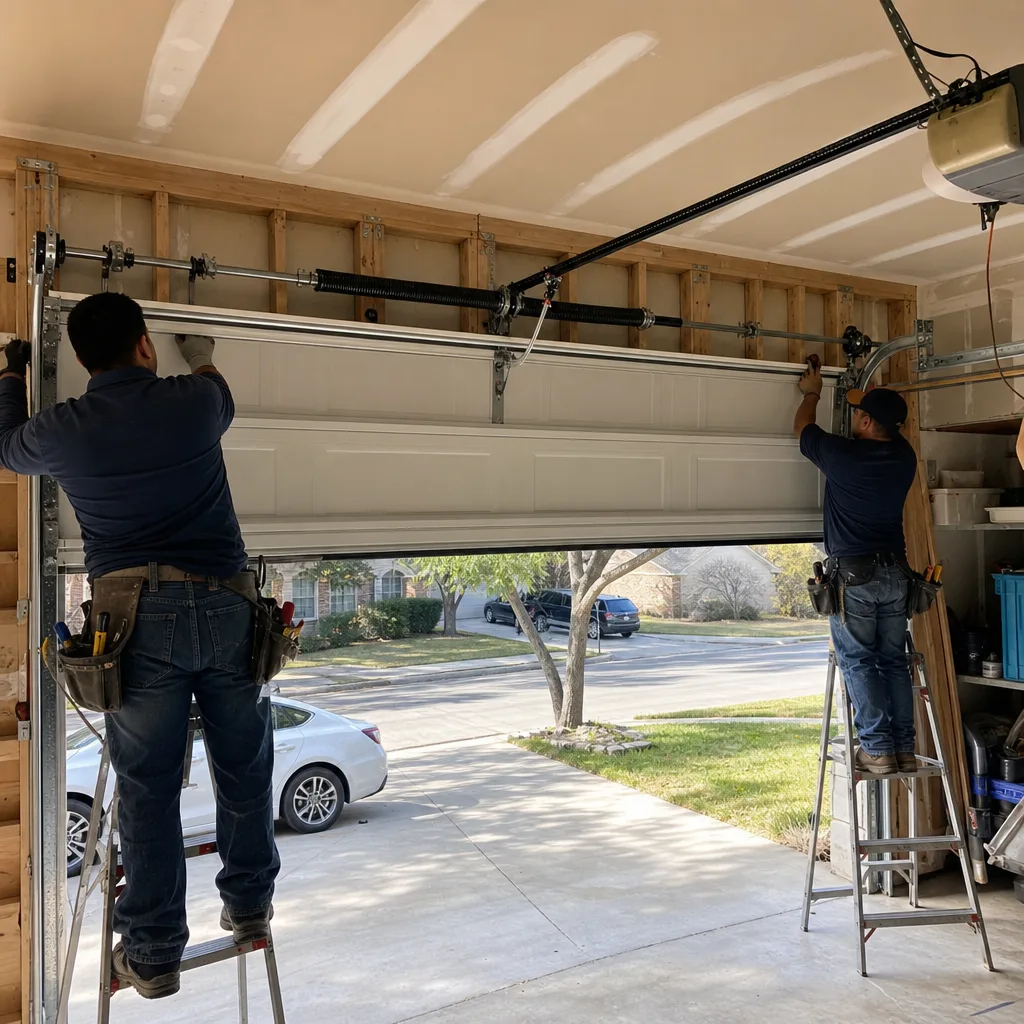
Most garage door maintenance articles are written for a generic climate and then never mention why the reader’s local weather changes the work. Here’s what actually matters in Richardson’s specific temperature swings, storm patterns, and the way both interact with a steel door on a concrete slab.
Summer: the 100°F track expansion problem
Steel expands when it heats. Your horizontal tracks were installed at whatever temperature the day of install happened to be, which means every summer they shift slightly wider and every winter slightly narrower. In a Richardson July, a track that was properly aligned at 70°F has expanded by roughly 1/16 inch. That doesn’t sound like much, but it changes the gap the roller rides in. The door gets louder, the rollers bind at the top of the curve, and the opener strains. What to do: check the track-to-roller clearance on the hottest week of the year. The roller should have about 1/8 inch of play. If it’s binding, the track brackets can be loosened and re-spaced, but this is a calibration job most homeowners shouldn’t attempt.
Spring storms: the water and debris reset
Richardson gets its serious weather between March and May. Hail, high winds, and heavy rain put two stresses on the door: impact damage to panels and water intrusion through degraded seals. After any storm with hail, check the door panels from inside the garage with the door closed and the lights on. Hail dents show as shadows on the inside face. Small dents are cosmetic; dents deep enough to kink the panel edge can bind the door in the track. After heavy rain, check the interior floor along the door line for water. A wet strip means the bottom seal has failed, and in Richardson that’s a $12 to $30 fix that prevents rust on the bottom panel’s interior frame.
Winter: the tension calibration window
Richardson doesn’t get the sustained cold that northern cities do, but the temperature swing between a January night and a January afternoon can hit 30 degrees. That cycling changes spring tension slightly. Steel springs lose a hair of lift in cold air and regain it in warm. What to do: on the coldest morning of the year, run the balance test from the annual section. If the door’s heavy in January but balanced in March, your springs are aging and the cold is exaggerating the wear. Budget for spring replacement before the next hot season, when the extra heat stress tends to finish off an already-weakened spring.
The practical takeaway: two balance checks per year, one in the cold and one in the heat, will catch spring fatigue months sooner than checking only in the mild spring or fall. Clopay and Amarr doors respond slightly differently to temperature swings based on their steel gauge and reinforcement, but the balance test works across all brands.
If you’d rather not handle seasonal calibration yourself, our Garage Door Repair in Richardson service includes a seasonal check as part of every annual tune-up. We’d rather catch the tension drift in January than meet the broken spring in August.
Your Printable Maintenance Log Format
A maintenance log is the cheapest diagnostic tool you’ll ever have. When your door does fail, the technician’s first question will be “when did you first notice it?” and the second is “what’s been done to it?” A written log answers both without a phone call.
Create a half-page log and tape it to the door track inside the garage. Copy this format:
- Date: when you did the work
- Task type: Monthly / Quarterly / Annual / Repair
- What you checked: one line, e.g. “balance test, cable inspection, lube pass”
- What you found: one line, e.g. “door drifts down 3 inches when released at waist height”
- What you did: one line, e.g. “lubed torsion spring, tightened hinge bolts on section 3”
- What you spent: any materials used, with product name
- Next check due: the date
This takes ninety seconds per entry. Over three years, it becomes a service history a technician can read in thirty seconds. It tells us whether the current balance issue is new or has been developing for eighteen months. It tells us if the door has had the same roller replaced twice, which points to a track spacing problem rather than a bad roller. It’s the difference between fixing the symptom and fixing the cause.
When our technicians visit a Richardson home, we photograph what we find and leave a written condition report, so the customer’s own records and our records build a continuous service history. If you’ve kept a log, bring it out. We read them. They make everything easier.
Also write down the door model and spring cycle rating on the log sheet. The spring’s cycle rating (usually printed on a tag wire on the spring itself, or in the door’s manual) tells you the spring’s expected life in cycles. Divide that by your daily cycle count, and you’ll know within six months when the spring is due. That’s the closest thing to a scheduled replacement date a garage door part can give you.
Common Mistakes to Avoid
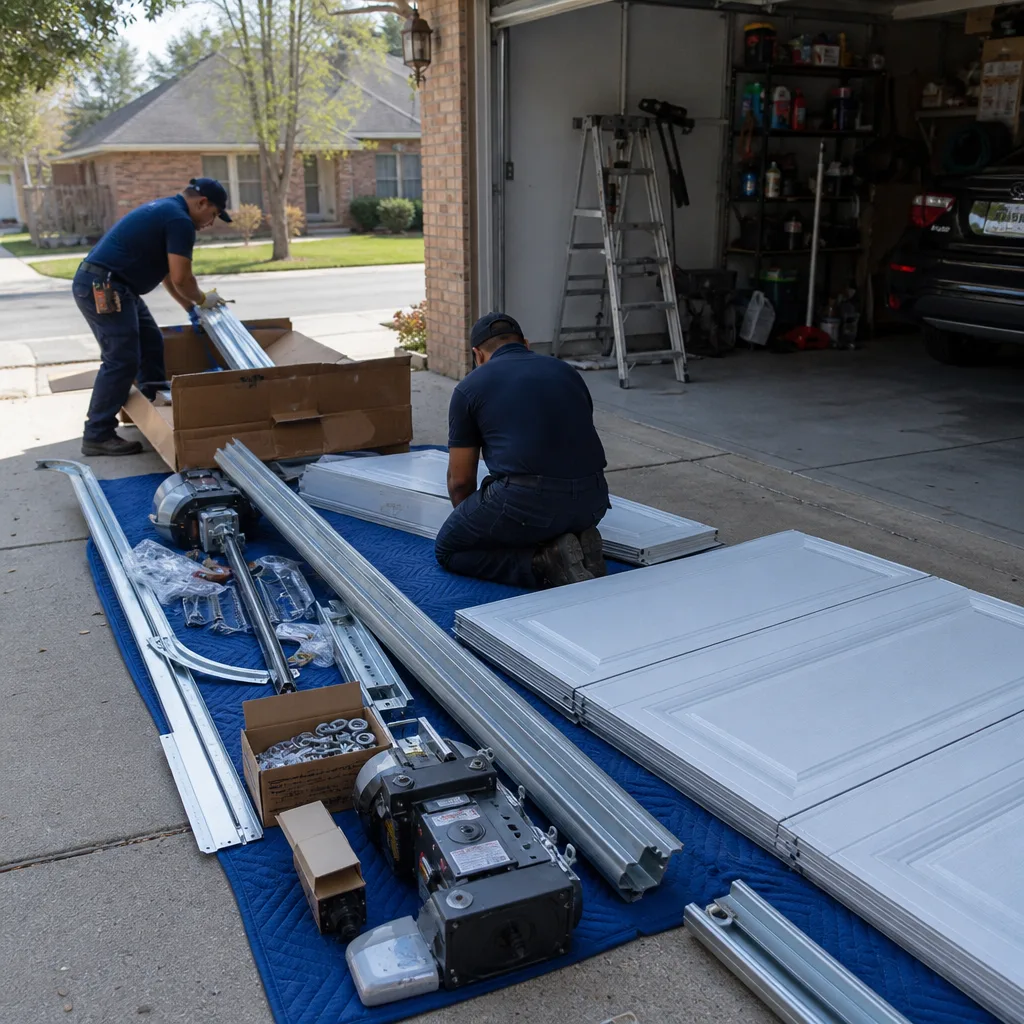
- Greasing the tracks. We see this in a third of the Richardson garages we visit on tune-ups. Tracks are designed to run clean and dry. Grease in the track collects dust, turns to paste, and wears the rollers down faster. Wipe tracks clean with a cloth and leave them alone.
- Using WD-40 as a lubricant. WD-40 is a solvent and water displacer, not a lubricant. It cleans and frees stuck parts, then evaporates and leaves the metal drier than before. Use white lithium grease for friction surfaces.
- Ignoring a noise because the door still opens. The door will keep opening right up until the day it doesn’t. By the time a torsion spring snaps, it has usually been making noise for a month. The noise is the warning. The fix is cheaper now than the replacement later.
- Testing the balance test with the door connected to the opener. The balance test requires pulling the emergency release first. If the door is still connected to the opener’s carriage, you’re not testing the springs, you’re testing the opener’s force. Pull the red cord, then lift.
- Tightening everything with pliers. Pliers round off bolt heads and leave you with a fastener you can never properly torque again. Use the correct socket or wrench. A $20 socket set prevents the kind of stripped hardware that makes a future repair more involved.
- Resticking a failing safety sensor instead of checking alignment. When the sensors get bumped and the door won’t close, the quick fix is to prop something against the sensor to hold it in line. That’s a safety device you’ve just disabled. Realign the sensors properly. It takes five minutes and keeps the reverse function actually working.
- Letting a frayed cable ride because “it’s been fine.” A frayed cable is a time bomb, not an inconvenience. When it snaps, the door drops on one side and the remaining cable takes the full load, which often pulls the track off the wall. Cable replacement is a $150 to $250 fix. The aftermath of a snapped cable under load can be double that.
When to Call a Professional
Some maintenance tasks are genuinely safe for the homeowner, and some are not. Anything that involves a torsion spring under tension is not. Cables that are frayed or slack are not. Track realignment that requires loosening the mounting brackets is not. If the door is off its track, stop using it entirely and call a technician. The door weighs 150 to 250 pounds, and gravity doesn’t negotiate.
Here’s the honest line: we’d rather you do the monthly and quarterly tasks yourself and call us only for the annual calibration and the big failures. That’s the cheapest arrangement for you and the most straightforward work for us. And when you do call, you’ll get a written price before any work starts, not a phone estimate that changes when we arrive. Servo Garage Doors Richardson offers free estimates in Richardson, and every quote is flat and written per Clause 1 of The Haven Standard. Call (972) 980-5944. If you have a written estimate from another company, bring the paperwork, and we’ll give you a second opinion on it without charging for the look.
Frequently Asked Questions
DIY maintenance costs $8 to $12 per quarter in materials, or roughly $40 per year if you already own basic tools. A professional annual tune-up in Richardson runs $90 to $180, and it typically includes balance testing, lubrication, fastener tightening, sensor alignment, and a written condition report. The biggest cost is neglect: a spring replacement runs $280 to $420, a track and roller job $300 to $400, and an opener motor replacement $200 to $400. Call (972) 980-5944 and we’ll give you a flat, written price for whatever tune-up level fits your door’s age and condition.
Most torsion springs are rated for 10,000 to 15,000 cycles and fail between 8 and 12 years of normal use in Richardson, where the heat accelerates metal fatigue slightly. A household that cycles the door six times per day puts about 2,190 cycles on the spring per year, so a 10,000-cycle spring lasts about four and a half years while a 15,000-cycle spring approaches seven.
Yes, and you should. The quarterly lubrication pass is the highest-value DIY task on this list, taking 30 minutes and costing about $10 in materials. The key is using the right product on the right component: white lithium grease on metal spring coils and steel roller bearings, silicone spray on nylon roller stems, and nothing at all in the tracks. Misapplied grease causes the damage it was meant to prevent.
Richardson’s summer heat expands the steel tracks slightly, which changes the gap the rollers ride in and makes the door run louder and rougher. The fix is usually a track-roller clearance check during the hottest week of the year. If the rollers are binding, the track brackets need re-spacing, which is a calibration job best left to a technician who’s done it a few hundred times.
Test the auto-reverse every month. Put a roll of paper towels in the door’s path and close it; the door should reverse within two seconds of touching the obstruction. The sensors and the force setting both drift over time, and a door that doesn’t reverse is the difference between a dinged bumper and a crushed pet. A sensor realignment is a five-minute fix that costs nothing.
Yes, tune-ups are quoted as a flat, written price before we arrive, and the price includes a written condition report with photos of anything we flag. What’s always free is the estimate and the evaluation if you’re calling about a specific problem. If you’ve got a written quote from another company, bring it in and we’ll review it without charge. Call (972) 980-5944 and we’ll schedule a look.
The Bottom Line
Garage door maintenance in Richardson is not complicated, but it is specific. The monthly checks catch change early. The quarterly lubrication pass prevents the wear that turns $25 rollers into $400 track jobs. The annual calibration pass catches spring fatigue and motor strain before either becomes a repair bill. The seasonal adjustments account for a climate that swings 30 degrees in a day and 100 degrees in a year. Skip the wrong things and you’ll pay for it. Do the right things and a garage door should run for a decade with minimal expense. Keep the log, use the right lube, and when the failure is bigger than a hand tool can handle, call someone who will photograph the part before quoting the replacement. For more guides & resources, visit our blog. That’s how it should work.
If you need a hand with any of it, we’re Servo Garage Doors Richardson, serving the city since 2015 with flat, written prices before any work starts and a documented photo record when we leave. Garage Door Installation in Richardson and Garage Door Opener Repair & Installation in Richardson carry the same standard. Call (972) 980-5944 for a free estimate or a second opinion on a competitor’s written quote.
Written by Marcus Deller, Owner at Servo Garage Doors Richardson, serving Richardson since 2015.