
Last updated September 20, 2026
Full 25-point door and opener safety check with every visit - springs, cables, rollers, tracks, and your LiftMaster or Chamberlain opener included
You get a price before we start. It does not change when the truck arrives.
 Before
 After
After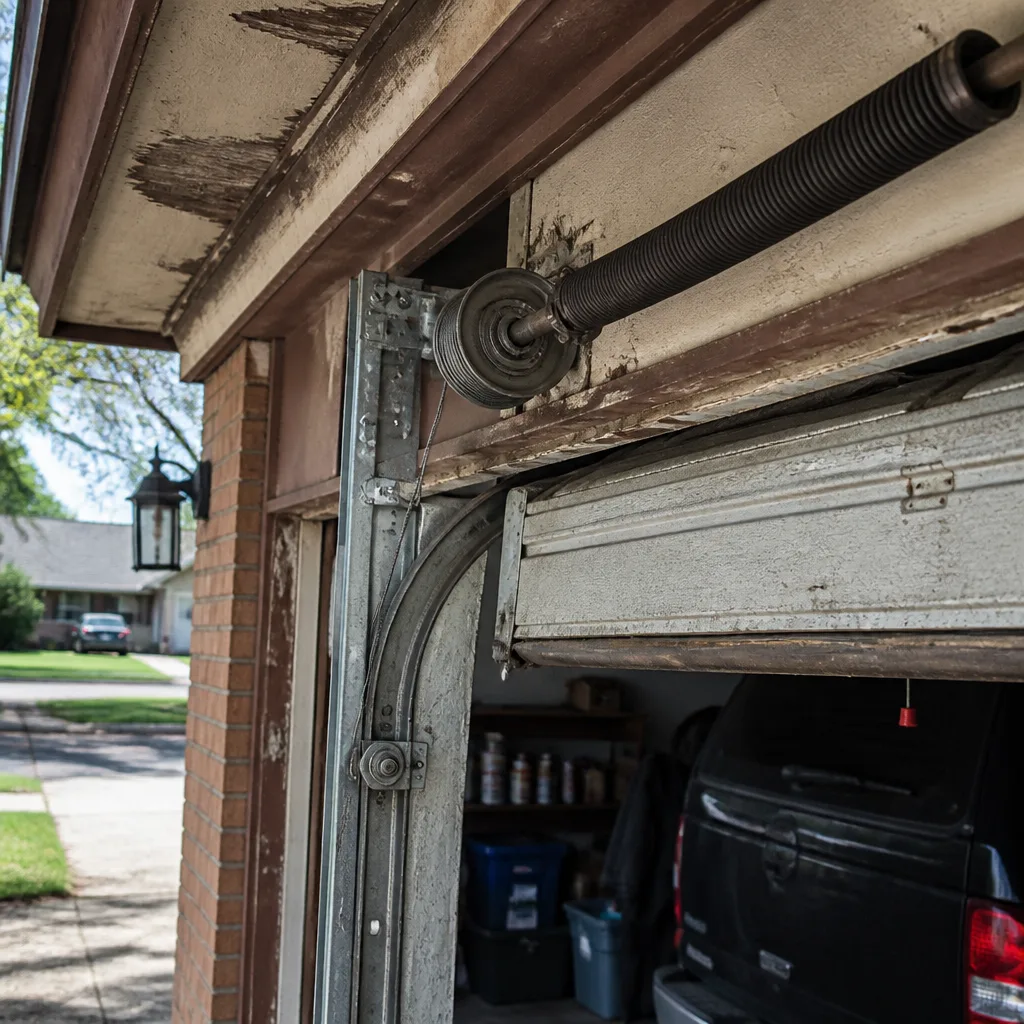 Before
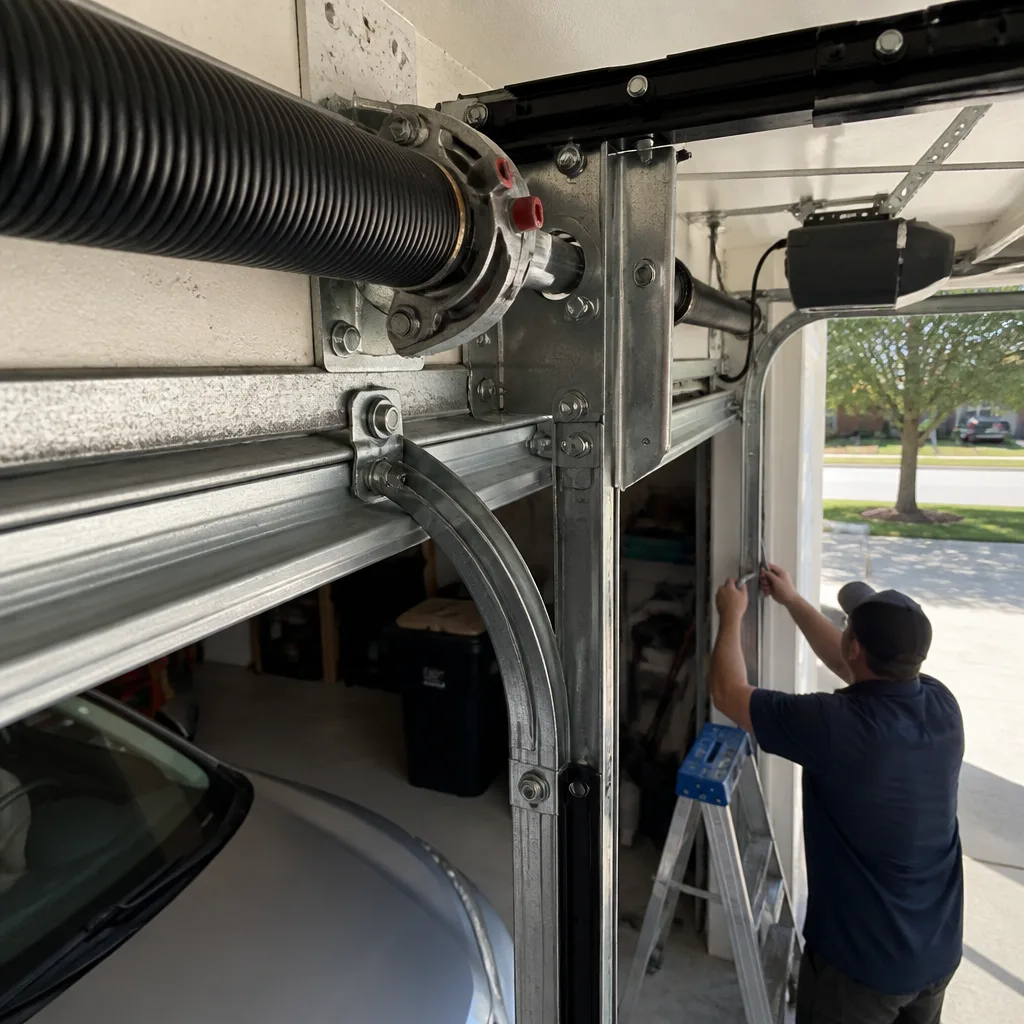 After
After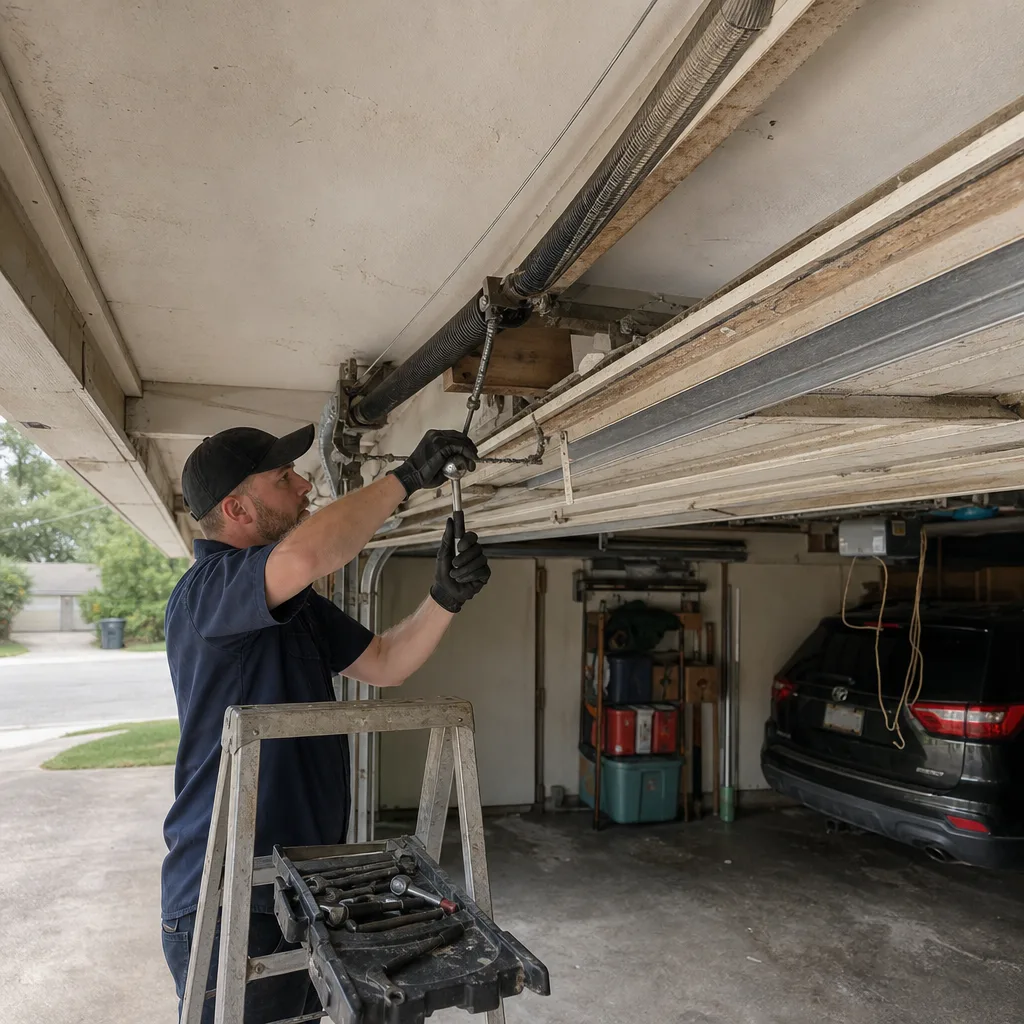 Before
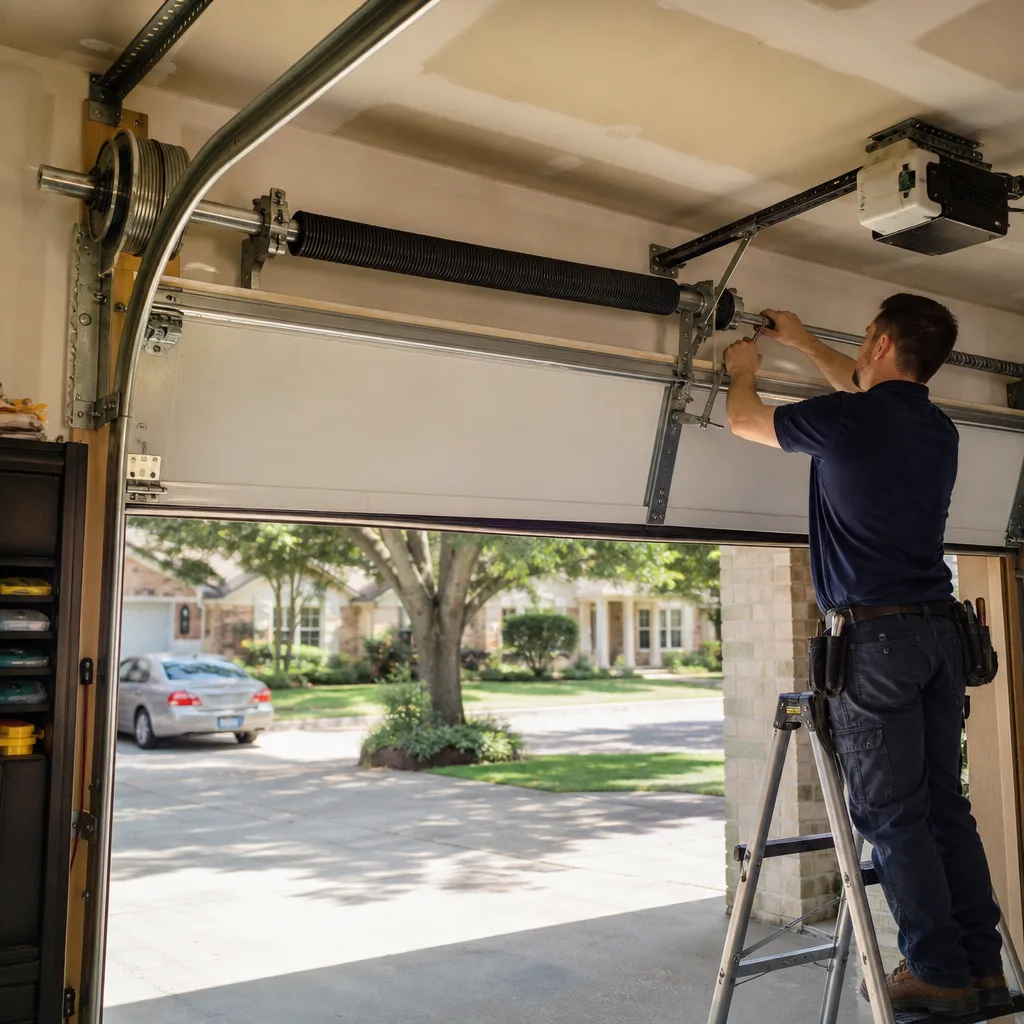 After
AfterGarage Door Warning Signs: A Richardson Homeowner’s Reference Guide
Most garage door failures in Richardson announce themselves weeks before they happen. The door that suddenly won’t open on a July morning didn’t fail that morning. It failed gradually, over the preceding month, while quietly showing signs that were easy to dismiss as quirks. The squeal you ignored was a bearing telling you it was dry. The two-second hesitation was a torsion spring losing tension. This guide translates what you’re seeing and hearing into what’s actually failing, what it costs to fix in Richardson, and which signs mean stop using the door tonight. For more context, see our Complete Guide to Garage Door in Richardson. We’ve been repairing garage doors in Richardson since 2015, and the patterns repeat: homeowners who read the signs early pay for a $45 part instead of a $400 emergency call.
Quick Answer
The most reliable garage door warning signs are a door that hesitates before moving, a grinding or metallic squeal during travel, visible gaps in a torsion spring, frayed cables near the bottom bracket, and a door that opens unevenly or reverses without obstruction. In Richardson, a hesitating door almost always indicates a torsion spring that has lost tension and will break fully within weeks. A grinding noise maps to worn rollers or dry bearings, while a door that opens faster on one side points to a cable or spring imbalance, not a track problem.
Table of Contents
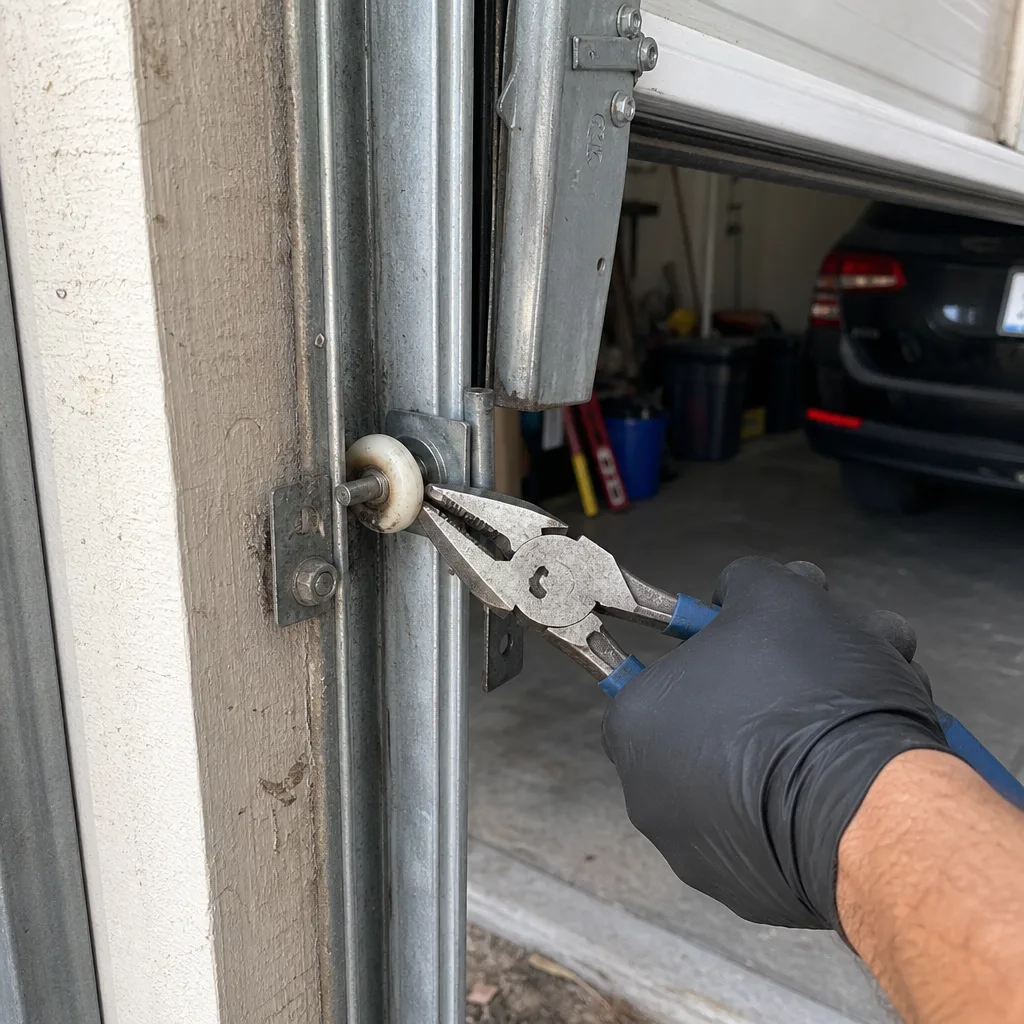
- Audio Diagnostics: What Your Garage Door Is Telling You
- Visual Warning Signs by Door Zone
- Movement Pattern Analysis: Reading How the Door Moves
- Opener Behavior Flags: When the Motor Is the Problem
- Spring Failure: The Most Common Richardson Emergency
- Triage: Stop Using the Door vs. Schedule a Visit
- What Richardson Climate Does to Garage Doors
- Common Mistakes to Avoid
- When to Call a Professional
- Frequently Asked Questions
- The Bottom Line
BeforeAfterAudio Diagnostics: What Your Garage Door Is Telling You
A garage door that’s working correctly makes a predictable sound: a low mechanical hum from the opener motor, the soft rumble of rollers in their tracks, and a gentle thud when the door settles closed. When a Richardson homeowner describes a noise as “new,” we know exactly where to look. Sound is the most consistent early warning system on a garage door because every component has a distinct failure signature. Here’s what the sounds mean, mapped to the specific part that’s failing.
The Grind
A grinding sound, like gravel being crushed, is metal wearing against metal. On most Richardson garage doors, this comes from one of three places: seized rollers with flattened bearings, a chain that’s lost lubrication and is chewing through its own links, or a trolley carriage that’s dragging along the rail instead of gliding. Rollers are the most common culprit. A garage door roller is a small wheel with internal ball bearings, and when those bearings dry out or crack, the wheel stops rolling and starts sliding. The fix is usually a roller replacement set, which runs $95 to $180 in Richardson depending on door height and roller quality, with nylon rollers being the upgrade we recommend for quieter operation.
The Squeal
A high-pitched squeal that happens at the same point in the door’s travel, usually near the top or the bottom of the cycle, points to dry hinge points or a torsion spring that’s rubbing against itself. Torsion springs sit on a metal tube above the door opening and wind and unwind under tension. When the spring is old or installed without adequate lubrication, the coils scrape against each other and produce a screech. This noise is not a warning sign of imminent failure on its own, but a spring that’s squealing is a spring that’s been under load for years. In our experience across Richardson, a squealing torsion spring often has visible rust and is past the halfway point of its expected cycle life. Lubrication quiets it temporarily, but the underlying age remains.
The Bang
A loud bang, like a firecracker or a dropped weight, is the sound of a torsion spring breaking. This is not a warning sign. This is the failure the warnings were warning about. When a spring breaks, the energy releases at once and the sound travels through the metal tube and into the garage structure. If you hear this, stop pressing the opener button immediately. A door with a broken spring can still be opened manually, but it will weigh between 150 and 400 pounds and will slam down if released. This is the moment to call for emergency service in Richardson, and the repair cost range is $180 to $340 for a standard pair of springs, with same-day service available.
The Chatter
A rapid chattering or rattling that happens while the opener motor runs is usually the opener itself. The motor has a drive gear inside, and that gear is plastic. Over years of use, the teeth wear flat and the gear starts skipping, producing a staccato rattle. On LiftMaster and Chamberlain openers, which we service constantly in Richardson, this gear is a known wear item with a lifespan of seven to ten years. The replacement part is inexpensive, usually under $30, but the labor to open the opener housing and reinstall the gear runs about $120 to $180. If you catch the chatter early, you replace a gear. If you ignore it, the gear strips completely and you’re replacing the opener.
Here’s the audio diagnostic chart in condensed form:
- Grinding = worn rollers, dry chain, or dragging trolley carriage. Cost to fix: $95-$180.
- Squealing = dry hinges or aging torsion spring. Cost to fix: $20-$60 for hinge lubrication, $180-$340 if spring replacement is needed.
- Banging = broken torsion spring. Cost to fix: $180-$340. Stop using the door.
- Chattering = worn opener drive gear. Cost to fix: $120-$180 for gear replacement, more for a new opener.
- Rumbling = door off-balance, usually a spring issue. Cost to fix: depends on diagnosis, $80-$340.
Visual Warning Signs by Door Zone
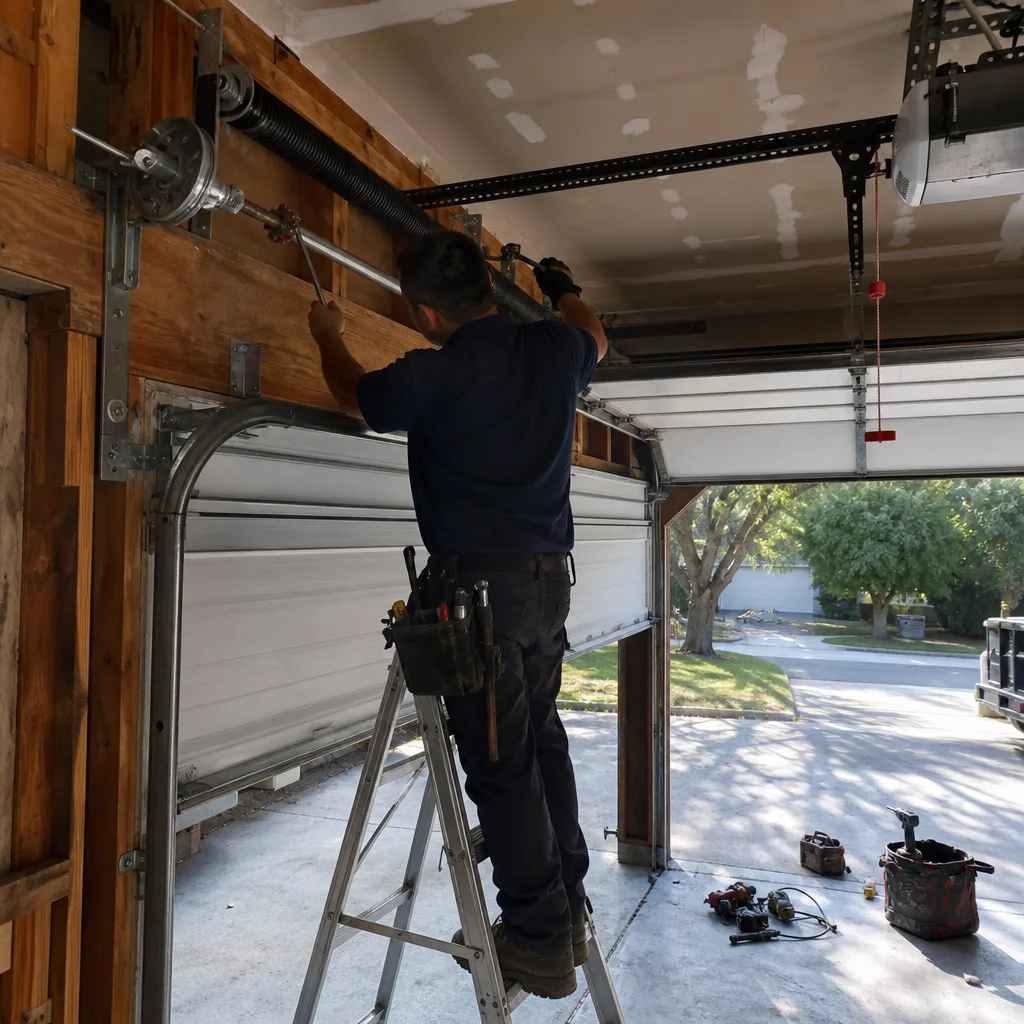
A ten-minute inspection once a season will catch most garage door failures before they strand you. Walk around the door and look at four specific zones. There’s no ladder required for this. All of these are visible from standing height or with a flashlight.
Zone 1: The Top Panel and Roller Area
Look at the top edge of the top panel. In Richardson, where summer temperatures routinely push past 100 degrees, the top panel absorbs the most heat and its paint is the first place weather damage shows. You’re looking for two things: rust streaks running down from the roller area and a panel that’s bowing or separating at the seams. Rust streaks mean the roller stems are corroding, which means the rollers themselves are likely on their way out. A bowing top panel is more serious: it means the door has been operating under uneven tension for a long time, and the panel skin is fatiguing.
Zone 2: The Cable Drum Area
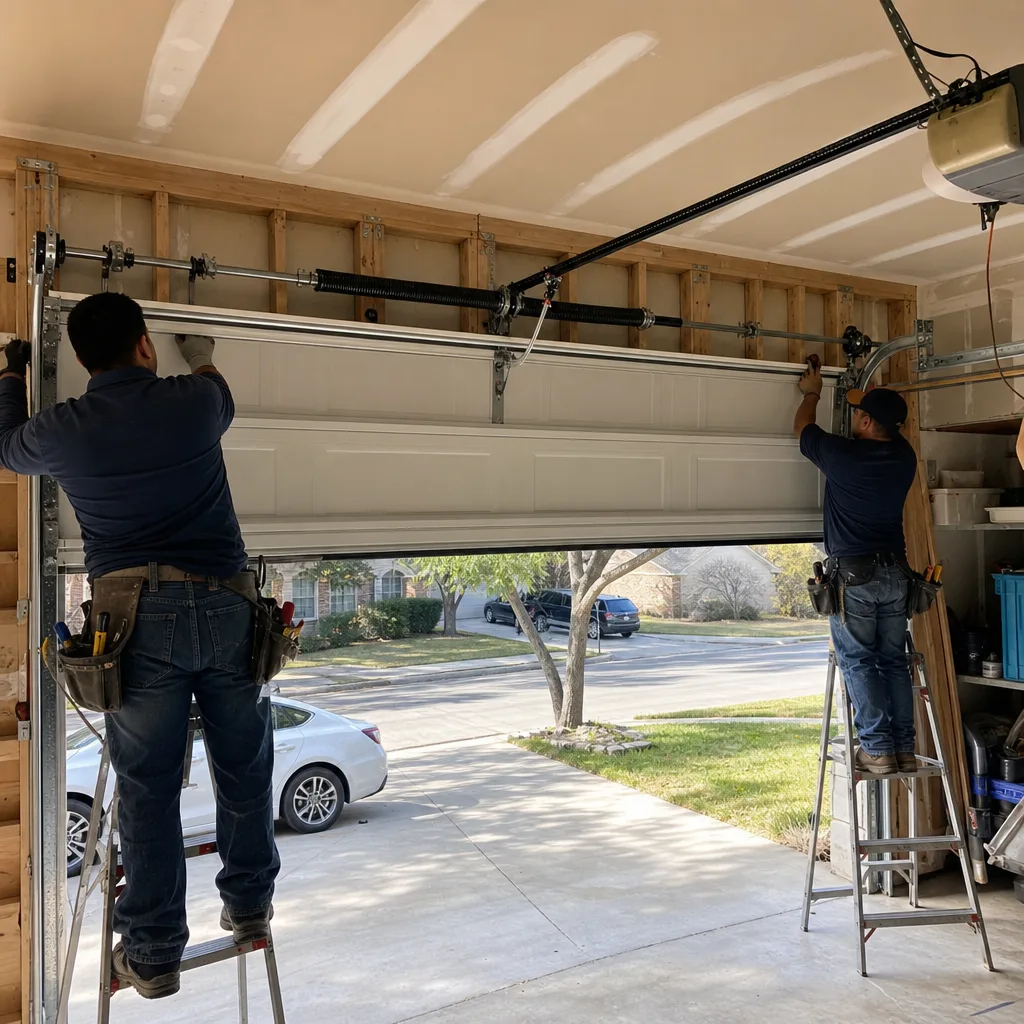
Above the door, at each end of the torsion tube, there’s a round metal spool called a cable drum. The lift cables wind onto and off of these drums as the door moves. Look at the cable where it leaves the drum. It should sit cleanly in the groove and travel straight down to the bottom bracket. If the cable looks fuzzy, frayed, or has individual wires sticking out, that cable is on borrowed time. A frayed cable is a break waiting to happen, and when a cable breaks while the door is moving, the door drops suddenly and the remaining cable takes the full weight. This is one of the most dangerous failure modes on a garage door. Replacement cables are inexpensive, about $80 to $130 in Richardson including labor, but the urgency is high.
Zone 3: The Bottom Bracket
The bottom bracket is the steel fixture bolted to the bottom corner of the door where the lift cable attaches. Look at it closely. If the bolts are loose, the bracket will shift slightly when the door moves, and over time the holes will wallow out and the bracket will detach under load. If you can wiggle the bracket by hand, the bolts are backing out. This is a five-minute fix when caught early and a panel replacement when caught late. Bottom brackets also fail from rust in Richardson’s humid spring months, so look for orange staining around the bolt heads.
Zone 4: The Weatherseal Line
Run your hand along the rubber weatherstrip on the bottom of the door and along the sides. The bottom seal is called an astragal, and it’s a sacrificial part. In Richardson, the heat accelerates rubber breakdown, and a seal that’s cracked or brittle lets in dust, pests, and summer heat. The side seals prevent light and drafts. A worn seal won’t cause the door to fail mechanically, but it’s a useful indicator of the door’s overall age. If your weatherseals are gone and you’re hearing new noises, the door’s other consumable parts are likely at a similar stage of wear. Replacement seals run $75 to $140 with labor.
Movement Pattern Analysis: Reading How the Door Moves
The most informative warning sign on a garage door isn’t a sound at all. It’s the way the door moves. A correctly balanced garage door travels smoothly through its full cycle without speeding up, slowing down, or tilting. Any deviation from that pattern is mechanically meaningful. Here’s how we interpret the movement patterns Richardson homeowners describe to us over the phone.
Hesitation Before Movement
When you press the opener button and the door waits for a beat or two before moving, that’s not a sticky track. The opener motor is working against a spring that’s no longer carrying its share of the door’s weight. Torsion springs are rated in cycles, typically 10,000 for a standard spring, and as they fatigue they lose tension gradually. The door gets heavier from the opener’s perspective, and the opener fights to move it. This hesitation is the classic pre-break signature of a torsion spring. In Richardson, a door that hesitates will usually break its spring within two to four weeks. The repair is a spring replacement, not an opener adjustment, and repeatedly running the opener in this condition accelerates opener gear wear as well.
Opening Unevenly
If one side of the door appears to rise faster than the other, or the door looks tilted as it travels, the cause is almost never the track. The tracks are passive guides. The actual lifting force comes from the springs and is transmitted to the door through the cables. An uneven door means the tension is uneven, which means one of three things is true: a spring has broken or lost significant tension, a cable has stretched, or a cable drum has slipped on the torsion tube. A track problem produces friction, noise, and jerking, but rarely a tilted door. When a Richardson homeowner describes a crooked door, we dispatch expecting a cable or spring diagnosis, and that’s what we find nine times out of ten. This condition warrants a stop-using-the-door classification because the imbalance can snap the loaded cable.
Reversing Direction Partway Through the Cycle
A door that starts closing, hits a point about six to ten inches off the ground, and then reverses is telling you something very specific. There’s either an obstruction in the sensor path or the close-force setting on the opener is set too low. The opener has two force settings: one for the opening cycle and one for the closing cycle. When the close force is marginal, the opener interprets normal resistance as an obstruction and reverses. This is not a glitch to reset with the wall button. It’s a limit or force adjustment issue that should be addressed before the opener’s logic board gets confused by repeated interrupted cycles. On some openers, particularly newer LiftMaster models with DC motors, the force settings are controlled by the logic board and the board itself may be failing. In our experience servicing Richardson homes, an opener that reverses randomly with a clean sensor path has a failing limit switch assembly about half the time, at about $110 to $160 to replace.
Dropping the Last Few Inches
When a door closes with a pronounced drop at the very end, settling into the closed position with a slam, the issue is usually the balance at the bottom of the travel. This can be a cable that’s worn unevenly on one side or a spring pair that’s aging asymmetrically. The door accelerates through the last portion of the cycle because the spring is no longer providing consistent counterbalance through its full wind cycle. This is a pre-break signature, not a cosmetic issue. Continue using the door and you’ll likely hear a bang soon.
Opener Behavior Flags: When the Motor Is the Problem
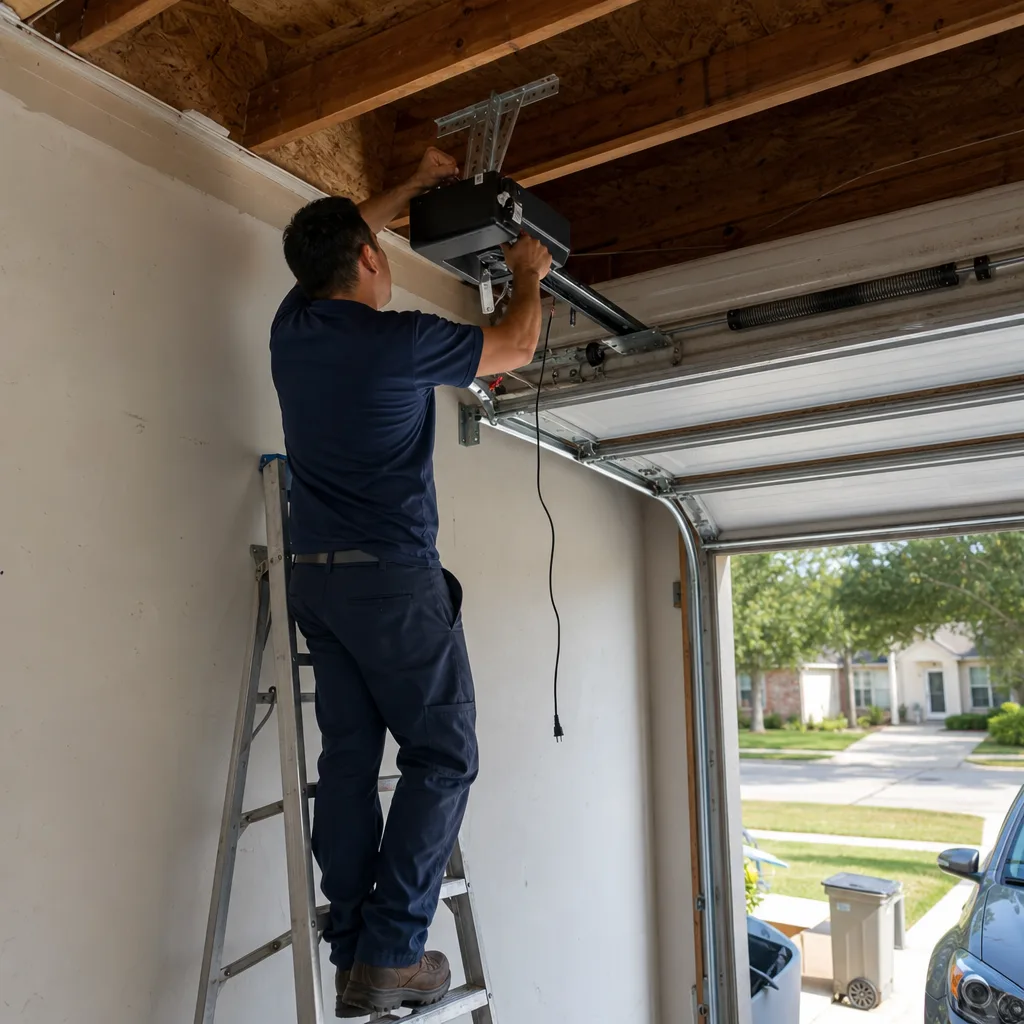
Openers account for a solid share of the warning signs that bring Richardson homeowners to our phone line. The opener is the most electronically complex part on the door, and the failure modes are distinct from the mechanical failures of springs and cables. Here’s how to tell opener problems from door problems.
Door Reverses Without Obstruction
If the door consistently reverses at the same point with nothing in the sensor path, and you’ve confirmed the sensor lenses are clean and aligned, suspect the opener itself before the door. The most common cause in our Richardson service area is a failing close-force limiter. This is a component inside the opener that tells the motor how much resistance is normal. When it starts sending false resistance readings, the opener behaves as though the door is hitting something and reverses. The fix is usually a limiter adjustment, which is a quick service call, or a logic board replacement at $180 to $260 if the limiter has failed outright.
Opener Runs But Door Doesn’t Move
When the motor hums and the drive mechanism appears to be working, but the door stays put, the likely cause is a coupler failure. The coupler is a small plastic or rubber fitting that connects the motor shaft to the drive gear. It’s designed as a sacrificial part so that a sudden stop breaks the cheap coupler instead of the expensive motor. If your opener hums but the door doesn’t move, the coupler has probably sheared. This is a $95 to $140 repair on most openers, and on Craftsman and Raynor units, the coupler is readily available locally. The question to ask is why it sheared, because the answer is often a door that’s gotten too heavy due to spring fatigue, which means the spring replacement and the coupler replacement should happen together.
Door Moves a Few Inches and Stops
An opener that moves the door a short distance and then gives up is usually hitting its internal force limiter. The motor is working too hard, and the logic board shuts the cycle down to protect the motor. This almost always means the door itself is too heavy, which points back to spring tension. The opener is not the problem, but it’s flagging the problem for you. Newer openers with diagnostic displays will flash a code on the wall button that corresponds to a force error. If you’re seeing force errors on a LiftMaster, the next call should be about the springs, not the opener. See our Garage Door Opener Repair & Installation in Richardson guide for more detail on opener diagnostics.
The Opener Constantly Runs After the Door Stops
This one is a limit switch issue. The limit switch tells the opener where the door is in its travel. When the switch fails, the opener loses track of the door position and keeps running past the stop point, or stops early. On modern openers, the limit switch is a small rotary encoder inside the motor unit. Replacement is usually straightforward at $100 to $150. On older openers, particularly some Craftsman and Chamberlain models from the 2000s, the limit assembly is mechanical and can sometimes be adjusted rather than replaced.
Spring Failure: The Most Common Richardson Emergency
Torsion spring failures account for more emergency calls in Richardson than every other garage door issue combined. The reason is physics: the spring is the only component on the door that stores mechanical energy and releases it on every cycle, and every release adds fatigue. A standard torsion spring is rated for roughly 10,000 cycles, which translates to seven to ten years of typical residential use. Most Richardson homes are still using the springs that came with the house, and if your home was built before 2018, your springs are statistically near the end of their rated life, regardless of how they sound.
The warning signs of spring failure are specific and progressive. First comes the hesitation we described earlier. Then comes a visible gap in the spring. Look at the torsion spring above the closed door. A healthy spring is one continuous coil. A failing spring often has a visible separation in the coils, sometimes a thin gap that looks like the spring has a broken tooth. That gap is where the spring has started to separate internally. The final stage is the audible bang and a door that won’t lift.
What Richardson homeowners should know about spring replacement:
- The springs come in pairs. If one spring has failed, the other is the same age and has cycled the same number of times. Replacing only the broken spring means a second service call within a year, in most cases. Most professionals replace both springs at once. The total cost range in Richardson is $180 to $340 for a pair, depending on spring size and door weight.
- Spring cycle life is a variable. A spring rated for 10,000 cycles will last a family that opens the door four times a day about seven years. A family that opens the door twelve times a day, which is common with two working adults and kids, will get about two and a half years. The cycle rating matters more than the calendar age.
- The high-cycle upgrade is worth it. Higher-cycle springs rated for 20,000 or 30,000 cycles cost about $25 to $40 more per pair and roughly double or triple the lifespan. If you’re planning to stay in your Richardson home long term, this is the single best garage door investment available.
- Spring replacement is dangerous work. A torsion spring under tension stores a significant amount of force, and when that force releases unexpectedly, the results can be catastrophic. This is not a DIY repair. The winding and unwinding procedure requires specific tools and training, and getting it wrong puts you under a long lever arm attached to a loaded spring. We always recommend a trained professional for this specific component.
For a deeper walkthrough of the repair process and what’s included in a spring replacement in Richardson, see our Garage Door Repair in Richardson page.
Triage: Stop Using the Door vs. Schedule a Visit
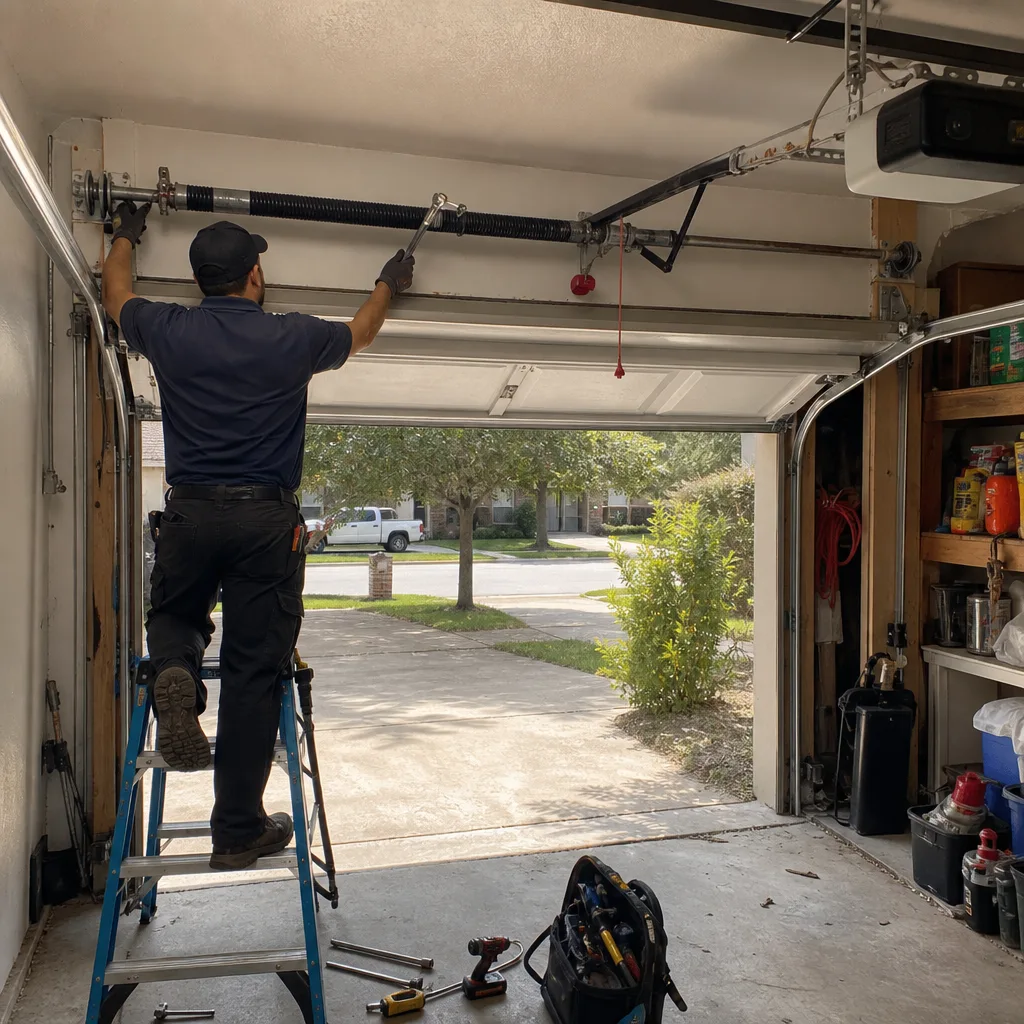
Not every warning sign means the door is dangerous. Some mean “call this week” and some mean “stop using the door and call now.” The distinction matters for your safety and your wallet. Here’s the triage decision tree we use when a Richardson homeowner describes their symptoms over the phone.
Stop Using the Door Immediately
- Broken spring (bang sound, door won’t lift) – The door is dead weight. Continued opener use will strip the opener gear. Manual operation is possible but dangerous without training.
- Frayed or snapped lift cable – A damaged cable under load can break suddenly and drop the door. The remaining cable is now carrying double the designed weight.
- Door opens unevenly with a visible tilt – This indicates an active tension imbalance. The loaded side can fail catastrophically.
- Loose bottom bracket – If you can wiggle the bracket where the cable attaches, stop using the door. A bracket that detaches under load becomes a projectile.
- Door falls freely from any height – This is an extreme version of the uneven-door scenario. The spring system has failed and the door is uncontrolled.
Schedule a Non-Emergency Visit
- Hesitation before movement with no loud noise – This is a spring in decline, not yet failed. Getting it replaced now, on your schedule, costs the same as the emergency call but without the stranded car on the other side of a closed door.
- Grinding or squealing noise – Worn rollers and dry hinges don’t fail catastrophically. They degrade the door’s smoothness and accelerate wear on other components.
- Weatherseal deterioration – Cosmetic and thermal. No safety risk.
- Door reverses at the same point with no obstruction – Annoying but not dangerous. Resolve the force limiter issue before the opener logic board fails.
- Opener runs but door doesn’t move, with a humming sound – Likely a broken coupler. The door is in whatever position it was in and is stable. Don’t try to force it.
The rule that underlies this triage: if the failure involves a component under tension, treat it as an emergency. Springs and cables are tension components. Rollers, hinges, openers, and weatherseals are not. If you’re uncertain which category your symptom falls into, a phone call to a professional with a description of what you’re seeing is faster than reading another article. The clearer you can describe the sound and the movement, the more accurate the diagnosis will be.
What Richardson Climate Does to Garage Doors
Richardson’s climate is hard on garage doors in ways that are specific and predictable. The summer heat, the spring humidity, and the temperature swings between them create a wear profile that’s different from what you’d see in a coastal or northern home. Understanding the local factors explains why some components fail here faster than national averages would suggest.
Heat and rubber. The bottom weatherseal and side seals are rubber or vinyl, and North Texas heat accelerates their breakdown. A seal that might last eight years in a temperate climate often gives out in five in Richardson. The heat also hardens the rubber, making it crack along the fold line where the seal compresses against the concrete. This is a normal part of local ownership, and replacement is inexpensive enough to treat as routine maintenance.
Temperature swings and metal fatigue. Torsion springs are steel under constant tension. The expansion and contraction from Richardson’s temperature swings, particularly the cold snaps in January and February, add micro-stress to the spring’s crystalline structure. In practice, we see more spring failures in early spring and late fall, when the temperature is swinging through thirty degrees in a day. A spring that survives the hot summer often fails on the first genuinely cold morning of the year, when the metal is at its most contracted state.
Humidity and corrosion. Richardson’s humid months, from April through June and again in September, promote rust on unprotected metal. Roller stems, hinge pins, and cable strands are the most vulnerable points. Rusted roller stems seize bearings faster, and rusted cable strands fray under load. This is why the visual inspection we described earlier includes looking specifically for rust streaks. It’s not cosmetic. It’s the local climate telegraphing which component is next.
Foundation movement. Richardson sits on clay-heavy soil, and the wet-dry cycles cause foundation movement in many neighborhoods, including Canyon Creek, Duck Creek, and the Heights. When a foundation shifts, the garage door opening can change shape slightly, which means the tracks fall out of alignment relative to each other. A door that binds at one point in its travel but runs smoothly elsewhere is often fighting a foundation-related track misalignment. This is a Richardson-specific diagnosis that visitors from other regions rarely encounter. For new door installations that need to work with a less-than-perfect opening, see our Garage Door Installation in Richardson guide for how we handle uneven openings.
Common Mistakes to Avoid
- Resetting the opener as a fix. When a door reverses or stops, pulling the power cord and plugging it back in resets the logic board but fixes nothing. The underlying cause remains, and repeated resets mask the symptom until the component fails completely. If the opener needs a reset more than once a week, there’s a real mechanical problem behind it.
- Lubricating a broken spring. Spraying lubricant on a torsion spring with a visible gap quietens the noise but does not restore the tension. The spring is still failing, and the quiet creates a false sense of security. This is one of the most common mistakes we see in Richardson, where the DIY culture is strong and the hardware store sells spring lube next to the garage door parts.
- Disconnecting the opener and running the door manually on a broken spring. The door weighs hundreds of pounds without spring support. Manually lifting it can be done, but setting it down without the spring’s counterbalance means controlling that weight by hand. A dropped door under manual operation has caused serious injuries. If the spring is broken, leave the door where it is.
- Replacing only one spring. As covered above, both springs on a standard door have the same age and cycle count. Replacing one saves money now but guarantees another service call soon, and the second call often comes at an inconvenient time. The math on replacing both at once works out better for most homeowners.
- Ignoring a frayed cable because the door still works. A frayed cable under load is like a rope with half its strands cut. It’s holding until it isn’t, and when it lets go, it lets go suddenly. The window between “looks frayed” and “snapped” can be days. This is a call-this-week situation, not a wait-and-see.
- Assuming all garage door noise is normal. Doors make noise as they age, which leads many homeowners to treat new noises as baseline drift. A door that’s gradually getting louder is a door that’s gradually failing. The diagnostic value of a new noise is highest when it first appears, because it’s still tied to a single new problem. Wait six months and the noises compound until isolation is harder.
- Choosing a repair company based on the lowest phone quote. Garage door pricing in Richardson spans a wide range, and the low end is often a bait number that grows once the technician arrives. We recommend getting the price in writing before work starts, which is the entire point of a written-price system like Servo Garage Doors Richardson home. If a company won’t put the price on paper before touching the door, that’s the red flag.
When to Call a Professional
Some garage door issues are safe to live with briefly. Others demand a professional’s attention the same day. Call a professional when the spring shows a visible gap, when the door hesitates on a daily basis, when you hear grinding that persists, when the door reverses unexpectedly more than occasionally, or when any cable shows fraying. These are all signs that a component is actively failing, and the failure mode on a garage door is rarely gentle. A professional can diagnose the specific component, quote the repair with a flat written price, and complete the work with the proper tools and tension handling. Servo Garage Doors Richardson offers free estimates in Richardson, and every quote includes a written scope and price before any work begins, per Clause 1 of The Haven Standard. Call (972) 980-5944 to have someone take a look, or use our Garage Door Repair in Richardson estimate process if you’d like the technician to document their findings with photos before quoting anything.
Frequently Asked Questions
Most warning-sign repairs in Richardson cost between $95 and $340, depending on the component. Roller replacement runs $95 to $180, cable replacement $80 to $130 per cable, opener gear or coupler repairs $95 to $180, and torsion spring replacement $180 to $340 for a pair. The higher end applies to heavier double doors and high-cycle spring upgrades.
Yes. Most repair companies in Richardson, including Servo, keep common parts stocked on the service vehicle, which means spring, cable, roller, and hinge replacements are typically completed the same day. Opener parts may require a return visit if the specific model requires a non-stock board or gear.
Disconnect the opener by pulling the red emergency release cord and lift the door manually. If the door is heavy, unbalanced, or rough to move, the problem is the door itself, usually the springs or rollers. If the door moves smoothly by hand but doesn’t work under opener power, the problem is the opener’s motor, gear, coupler, or logic board.
An opener that reverses without visible obstruction usually means the close-force setting is too low, the sensor lenses are misaligned or dirty, or the force limiter is failing. Check the sensor lights first; if both are solid, the issue is likely a force setting or limit switch problem inside the opener.
Yes. Replacing a spring that’s showing wear costs the same as replacing a broken one, but scheduling it on your timeline avoids the emergency dispatch, the stranded car in the garage, and the risk of a secondary failure from the door dropping. In Richardson, spring replacement before failure typically costs $180 to $340 for a pair.
We service all eight major brands, including LiftMaster, Chamberlain, Genie, Clopay, Amarr, Wayne Dalton, Craftsman, and Raynor. Parts for older models are usually available locally or through our supplier network, and the written quote you’ll receive covers parts and labor before any work starts. Call (972) 980-5944 for a free estimate.
The Bottom Line
A garage door is a system of components that wear at predictable rates, and every component announces its decline before it fails. The hesitation before movement, the grind at the halfway point, the rust streak on a roller stem, the frayed cable strand, the tilted panel on the way up: these are the door’s only way to communicate. In Richardson, where the heat accelerates rubber and the clay soil shifts foundations, reading these signs correctly matters more than it does elsewhere. Catch the warning early and you’re paying for a part. Wait until the warning becomes a bang and you’re paying for a part, a secondary repair, and an inconvenient morning. The triage list above tells you which signs mean stop now and which mean call this week. For more guides & resources, visit our blog. Either way, when the time comes to have someone look, demand a written price before work starts. That’s not a special request. That’s the minimum standard a professional should meet.
Written by Marcus Deller, Owner at Servo Garage Doors Richardson, serving Richardson since 2015.